
Quick answer: Bathtub reglazing is usually the better value when the existing tub is structurally sound but stained, chipped, or outdated; a liner makes more sense when a compatible tub needs a new physical shell. Reglazing preserves the tub’s contours and costs less, while liners cost more and can conceal moisture problems if poorly fitted.
Key takeaways
- Reglazing is best for a sound tub with cosmetic wear, stains, small chips, or an outdated color.
- A liner adds a fitted shell but reduces interior space and requires an exact, watertight installation.
- Angi estimates reglazing at $280–$600 and liners at $2,700–$10,200 nationally, not as Jemco pricing.
- Neither option should cover active leaks, severe movement, widespread corrosion, or structural failure.
- New Jersey owners should confirm permit and plumbing requirements if drain, overflow, or piping work is involved.
Bathtub liner vs. reglazing: What is the short answer?
For most worn but structurally sound tubs, professional reglazing is the simpler and less expensive choice. It repairs and prepares the existing surface, then applies a new finish without placing another shell inside the bathing well.
A liner can be appropriate when a compatible tub needs a physical acrylic or PVC covering and the owner accepts a higher price and slightly smaller interior. Its success depends heavily on precise measurement, secure adhesion, and watertight drain, overflow, and perimeter details.
The deciding issue is not merely how bad the tub looks. A stained, dull, chipped, or dated surface may be a strong reglazing candidate, while movement, hidden leakage, major rust-through, or a failing subfloor requires diagnosis before either cosmetic method. Owners comparing either option with demolition can separately review why resurfacing can beat replacing a porcelain tub.
In New Jersey’s older housing stock and shore-area properties, homeowners should look beyond color. Humidity, hard-water deposits, repeated rental turnover, and aging drain assemblies can affect which approach is sensible and what preparation is needed.
How do reglazing and tub liners actually work?
Reglazing, also called refinishing or resurfacing, keeps the existing fixture. The process typically includes cleaning, removing contaminants, repairing suitable chips or surface damage, preparing the substrate for adhesion, applying the coating system, and allowing it to cure.
Because the finish follows the original shape, reglazing preserves molded details, bathing depth, and the proportions of vintage cast-iron or steel tubs. It can also address an unwanted color without adding seams around a separate insert. See Jemco Reglazers’ overview of bathtub resurfacing in New Jersey for the scope of that service.
A bathtub liner is a custom-formed shell installed over the old tub. An installer identifies or measures the fixture, obtains a compatible liner, trims it, bonds it to the tub, and reconnects or replaces drain and overflow components as the installation requires.
A liner is not the same as a bottom-only inlay, nor is it a new tub. It leaves the original fixture beneath the shell. This can avoid demolition, but it creates an interface where poor fit, flexing, failed seals, or trapped water may become difficult to inspect.
What are the advantages and disadvantages of each option?
| Decision factor | Reglazing | Tub liner |
|---|---|---|
| Appearance | Follows the original tub contours and can refresh worn color and gloss | Creates a uniform acrylic or PVC surface with a molded appearance |
| Interior space | Preserves the existing bathing dimensions | Reduces interior dimensions because the shell sits inside the tub |
| Surface damage | Can address suitable stains, wear, scratches, and minor chips after preparation | Covers the visible surface but does not repair hidden structural or moisture problems |
| Installation risk | Results depend on preparation, ventilation, coating application, and curing | Results depend on exact fit, bonding, drain details, and watertight perimeter seals |
| Design flexibility | Useful when preserving vintage contours or changing the finish color | Available only when a compatible mold, size, and shape can be sourced |
| Future inspection | Damage to the underlying fixture is generally easier to observe because no separate shell conceals it | The old tub is concealed, making trapped moisture harder to detect |
Reglazing is not a cure for a tub that flexes excessively, leaks through the body, or has lost structural integrity. It also requires controlled preparation and curing; rushed work or unsuitable DIY chemicals can create adhesion and safety problems.
A liner’s main advantages are complete visual coverage and no coating cure across the bathing surface. The tradeoffs are greater cost, a more limited fit for unusual tubs, a somewhat smaller bathing well, and the possibility of water becoming trapped between layers if seals or fittings fail. This Old House specifically identifies trapped water as a liner risk.
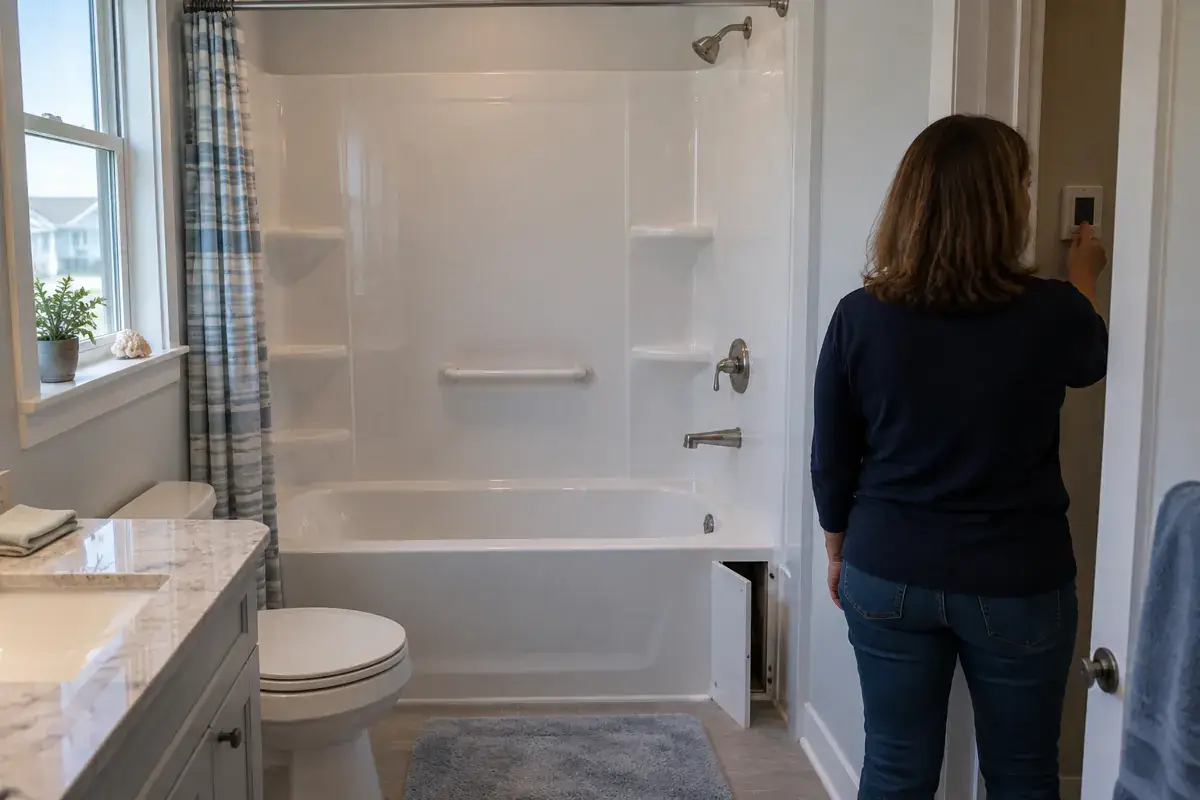
How much does reglazing cost compared with a tub liner?
National published estimates show a substantial price gap. Angi estimates bathtub reglazing at $280–$600 and liner installation at $2,700–$10,200. These are broad, typical national ranges, not prices from Jemco Reglazers and not quotes for a particular New Jersey home.
| Option | Typical published range | Factors that can raise the total |
|---|---|---|
| Reglazing | $280–$600, according to Angi | Heavy stripping, extensive repairs, difficult access, unusual materials, or surrounding surface work |
| Tub liner | $2,700–$10,200, according to Angi | Custom molding, wall surrounds, drain or overflow work, access limitations, and substrate repairs |
Price should be compared by scope rather than by the headline number. Ask whether repair, preparation, caulk removal, drain handling, finish choices, cleanup, and return visits are included. A very low reglazing quote may omit the preparation that controls adhesion; Jemco Reglazers discusses this issue in its guide to a common bathtub reglazing pricing mistake.
A liner may be difficult to justify when the tub only has cosmetic wear. Conversely, paying to coat a fixture with unresolved structural failure is false economy. Get the tub’s condition assessed first, then compare written scopes with the same repair assumptions.
Which option is faster, and when can the tub be used?
Angi describes reglazing as taking about two to five hours to perform and liner installation as taking one to two days. Those figures describe work time, not necessarily the full wait from ordering to use. A custom liner may require a separate measurement visit and manufacturing or delivery time before installation begins.
Jemco Reglazers states that most of its resurfacing projects are completed in a few hours and that surfaces are ready to use within 24 hours. Actual timing still depends on surface repairs, site conditions, the coating system, temperature, humidity, and the instructions provided for that specific project.
A liner can potentially be used soon after installation, but the installer’s requirements for adhesive, sealant, drain, and overflow work control the schedule. Do not assume “same day” means immediately after the crew leaves.
For an occupied home or rental, count the total interruption: inspection, repair, work, ventilation, cure or sealant time, and cleanup. Property managers should leave schedule buffer rather than promising a tenant access at the earliest possible minute. Reglazed surfaces should not be tested with water before the stated cure time.
When should you choose a liner, reglazing, or neither?
Start with condition, not the desired color. Use this sequence before requesting proposals:
- Check for movement. Press only as you normally would when entering the tub. Notice flexing, rocking, soft flooring, or gaps that open at the wall.
- Look for water evidence. Stains on ceilings below, damp odors, swollen trim, recurring caulk failure, or moisture at an access panel deserve investigation.
- Identify the substrate. Cast iron, steel, and fiberglass do not fail in the same way, and repair methods must match the material.
- Separate cosmetic wear from structural damage. Dullness, hard-water staining, an outdated color, and repairable chips point toward reglazing; rust-through, major cracks, or unstable support do not.
- Confirm liner compatibility. Unusual shapes, vintage details, integrated surrounds, and nonstandard drain locations may limit available shells.
Choose reglazing when the fixture is stable and the main problems are surface wear, stains, minor repairable damage, or color. This is often practical for landlords refreshing a sound rental between tenants and for homeowners who want to preserve an older tub’s dimensions.
Consider a liner when a precise compatible shell exists, the underlying installation is dry and stable, and complete coverage is worth the added cost. Do not choose a liner simply to hide unexplained cracks, odors, moisture, or corrosion.
Choose neither until leaks, widespread rust, severe fiberglass movement, plumbing defects, or damaged framing and subflooring are corrected. Jemco Reglazers provides chip, crack, fiberglass, and full bathroom surface restoration services, but some failures properly call for plumbing, carpentry, or fixture replacement instead.
What New Jersey conditions and permit issues matter?
New Jersey bathrooms can present different stresses even within the same service area. Shore-area homes in Ocean County may experience long humid periods and seasonal occupancy, while older homes in Essex, Hudson, Mercer, or Somerset counties may have vintage tubs, tight access, and aging plumbing. Hard-water buildup can also disguise the true condition of the finish.
Humidity does not automatically rule out either method, but the room must be dry enough for the specified adhesives, coatings, and sealants. Active moisture behind walls or beneath the tub needs correction first. In a seasonal property, inspect seals and plumbing before reopening rather than assuming an unused bathroom stayed dry.
New Jersey’s ordinary-maintenance rule allows qualifying maintenance without a permit, but it excludes alteration, replacement, or relocation of water, sewer, drainage, waste, vent, and similar piping. Because a liner installation may involve the drain and overflow, owners should ask the local construction office whether the exact scope needs a permit and whether a licensed plumbing professional is required. Do not rely on a contractor’s general statement when the municipal office can evaluate the actual work.
For local context, Jemco Reglazers is a family-owned business based in Toms River with 15+ years of hands-on experience and serves communities including Brick, Jackson, Lakewood, Point Pleasant, Freehold, and Princeton, as well as Ocean, Hudson, Essex, Somerset, and Mercer counties. Its gallery of completed reglazing work can help owners evaluate the appearance of resurfacing without treating photos as proof that every damaged tub is a candidate.
What should you ask before signing a contract?
A useful proposal should explain what is being installed or applied, what repairs are included, and what conditions would stop the work. Compare the answers in writing rather than relying on broad terms such as “resurfacing,” “insert,” or “lifetime finish.”
- For reglazing: Ask how the surface will be cleaned, repaired, prepared, ventilated, coated, and protected while curing.
- For a liner: Ask how the tub model is matched, how voids are prevented, how the drain and overflow are handled, and who corrects plumbing or moisture defects.
- For either option: Ask what is excluded, when the tub can be used, which cleaners are acceptable, and what written warranty terms actually cover.
- For rentals: Ask for care instructions that can be handed to tenants and clarify responsibility for damage caused by abrasive cleaners, bath mats, or unauthorized repairs.
- For safety: Discuss traction needs before selecting a finish or liner, especially for older adults or anyone with limited mobility. A separate guide explains non-slip tub coating and safety options.
Be cautious if an estimate is offered without questions about leaks, tub material, movement, previous coatings, or access. Also avoid choosing a liner solely because it covers more: concealment is not repair. The most defensible choice is the least invasive method that addresses the actual defect without burying a condition that should remain visible and serviceable.
Frequently Asked Questions
Can a bathtub liner be installed over a fiberglass tub?
Sometimes, but compatibility depends on the exact tub model, shape, support, and condition. Fiberglass tubs that flex, crack, peel, or separate need diagnosis before being covered. A shell should not be used to conceal delamination or an unstable base, because movement can compromise the liner’s fit, seals, and drain connections.
Can an old cast-iron bathtub be reglazed successfully?
A stable cast-iron tub is often a strong candidate because reglazing preserves its shape and substantial construction. Surface rust, chips, old coatings, and drain-area condition still need evaluation. Rust-through, chronic leakage, or damage around the drain may require repair or replacement rather than another cosmetic coating.
Is reglazing a better choice for a rental property?
Reglazing can suit rentals when the tub is structurally sound and turnover time, cost, and appearance matter. Owners should budget enough curing time, provide tenants with written cleaning instructions, and avoid treating recurring leaks or movement as cosmetic problems. A liner may make sense in select units, but its higher cost and concealed interface deserve consideration.
What happens if water gets under a bathtub liner?
Water trapped between the liner and original tub can cause odor, movement, seal failure, and difficult-to-access moisture problems. The source may be a failed perimeter seal, drain detail, or poor fit. Stop using the fixture if leakage is suspected and have the liner and plumbing evaluated rather than repeatedly applying surface caulk.
Can tub reglazing and wall tile reglazing be done together?
They can be coordinated when both surfaces are suitable, which may create a more consistent bathroom update without demolition. The scope must account for grout condition, caulk joints, repairs, ventilation, masking, and separate cure requirements. Tile with active water intrusion, loose sections, or failed backing should be repaired before cosmetic resurfacing.
Sources
- How Much Does Bathtub Refinishing Cost?
- Bathtub Liner or Refinishing: Which Is Worth It?
- N.J. Admin. Code § 5:23-2.7 — Ordinary Maintenance
- New Jersey Department of Community Affairs — Current Construction Codes
Written by the team at Jemco Reglazers, a family-owned New Jersey bathtub and tile reglazing company with over 15 years of hands-on experience restoring bathroom surfaces.