
Quick answer: Reglazed bathtubs may be available in standard or custom-matched colors, with sheen options determined by the coating system and refinisher. The color is mixed into the topcoat before application, so homeowners across New Jersey can match existing tile, update an outdated color scheme, or simply refresh a worn tub without replacing it.
Key takeaways
- Reglazed tubs can be finished in standard white, off-white, or a custom color matched to your tile and fixtures.
- Gloss finishes show more shine and reflect light, while matte and satin finishes hide water spots and minor surface imperfections better.
- Color is part of the applied coating system, but the finish can still wear or fade if it is damaged, cleaned with abrasive products, or not maintained properly.
- Most reglazing projects take just a few hours to complete and are ready to use within 24 hours, according to Jemco Reglazers.
- Darker and custom colors may cost more and require more precise color matching than standard white or almond.
Can You Really Choose a Custom Color When Reglazing a Tub?
Yes. When a bathtub is reglazed, the technician applies a new coating system over the prepared surface, and compatible products may be tinted beyond standard white or almond. This is one of the most overlooked benefits of bathtub resurfacing in New Jersey: you are not stuck with whatever shade the tub came in from the factory.
Jemco Reglazers serves Toms River, Brick, Manchester Township, Freehold, Howell, Lakewood, Jackson, Point Pleasant, Middletown, and communities in Ocean, Essex, and Mercer counties. Ask which color-matching options are available for your tub and coating system. This guide focuses specifically on the color and finish decisions involved in reglazing. If you are still weighing reglazing against full tub replacement, see our separate breakdown on why resurfacing beats replacing a porcelain tub.
Gloss vs. Matte vs. Satin: Which Tub Finish Should You Pick?
The finish sheen matters just as much as the color itself, and it changes both the look and the day-to-day feel of the tub. Here is how the three common options compare.
| Finish | Appearance | Best For | Maintenance Notes |
|---|---|---|---|
| Gloss | Bright, reflective, classic porcelain look | Traditional bathrooms, buyers who want a crisp, polished feel | Shows water spots and soap film more readily, needs regular wipe-downs |
| Satin | Soft sheen, subtle reflection | Most households wanting a balance of shine and low-maintenance appearance | Hides minor water marks better than gloss |
| Matte | Flat, non-reflective, modern feel | Contemporary bathrooms, tubs near bright windows or lighting | May show scuffs depending on the coating; matte sheen alone does not provide verified slip resistance |
Matte and textured finishes can overlap with slip-resistance treatments. If a non-slip surface is your main priority rather than aesthetics, our page on non-slip tub coatings and safety options covers that in more depth.
How Do You Choose a Bathtub Color That Matches Your Bathroom?
Color decisions usually come down to one of three goals: matching existing tile and fixtures, correcting a mismatched or dated color scheme, or starting fresh with a new palette during a broader remodel.
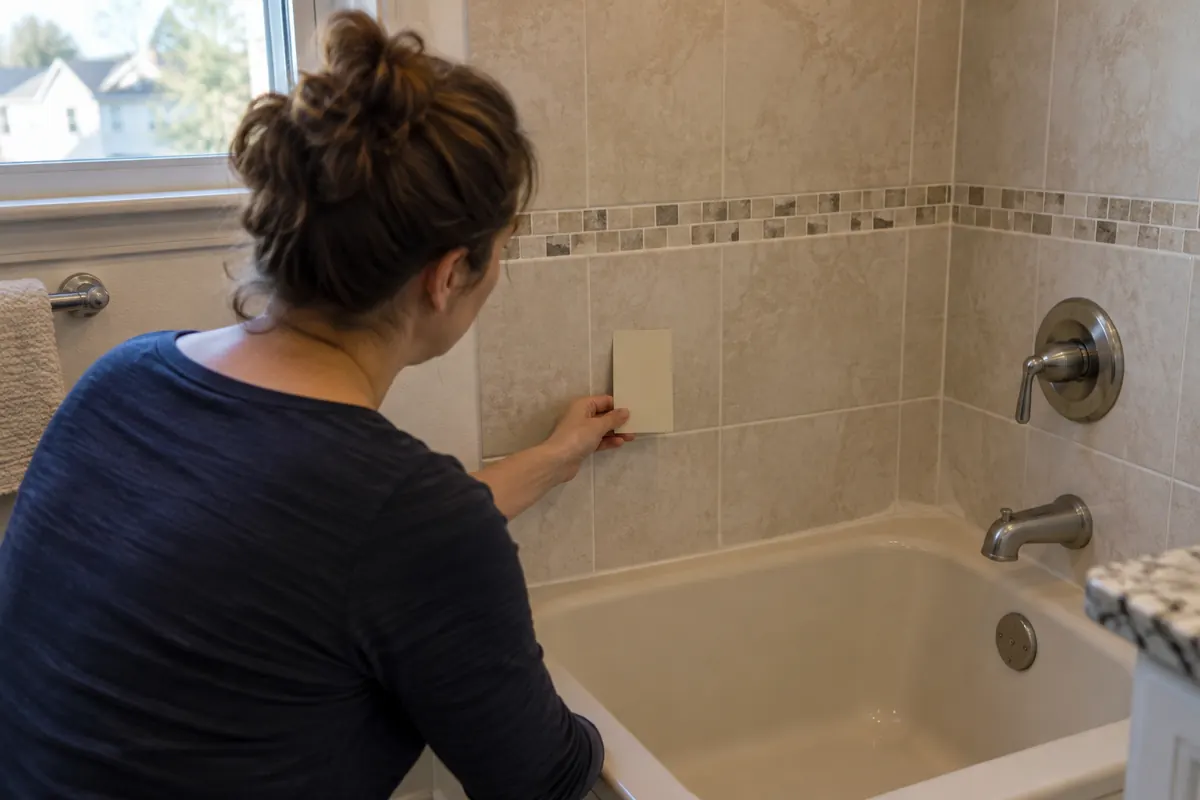
- Bring a sample. A tile chip, cabinet swatch, or even a photo in good lighting helps a technician mix a closer match.
- Think about room light. Bathrooms with little natural light tend to look better with lighter, warmer whites, since cool grays or stark whites can feel sterile under fluorescent lighting.
- Consider resale. Standard white or off-white tends to appeal to the widest range of future buyers, which matters for rental properties and homes you plan to sell.
- Account for staining. The visibility of hard-water spots and soap residue depends on their color and contrast with the finish, so compare samples under the bathroom’s actual lighting.
For multiple units, a consistent neutral color can simplify future design decisions and make fixtures easier to coordinate.
How Durable Are Custom Colors Compared to Standard White?
A compatible custom color can perform similarly to a standard color, but durability also depends on the complete coating system, surface preparation, application, curing, use, and maintenance. That said, a few practical points are worth knowing before you commit to a bold or dark shade.
- Darker colors can show scratches, dulling, and soap scum buildup more visibly than lighter tones over time, simply because contrast makes wear more noticeable.
- Custom color mixing requires more precise matching than stocking a pre-mixed white, which can affect turnaround on the color-mixing step, though the application and cure process stays the same.
- According to HomeAdvisor, a full reglazing job generally takes two to four hours of hands-on work, followed by a curing period before the tub is ready for use. Jemco Reglazers typically completes most projects in just a few hours, with surfaces ready to use within 24 hours.
- Proper aftercare matters more than color choice for long-term durability. Avoid abrasive cleaners and harsh chemicals regardless of the finish you choose, since these shorten the life of any coating.
What Does Custom Tub Color Reglazing Typically Cost?
Reglazing quotes vary with the tub’s material and condition, required repairs, preparation, and the available color or finish options.
Ask whether a custom color or specialty sheen affects the quote, since available options and pricing vary by coating system and project. These figures are general industry estimates, not Jemco Reglazers’ pricing, so always confirm an accurate quote for your specific tub and chosen finish. You can review this common bathtub reglazing pricing mistake before comparing bids from different companies.
What Should You Check Before Picking a Color and Finish?
A short checklist can keep the decision simple and prevent surprises once the coating is applied.
- Confirm whether the company can custom-tint colors or only offers a limited stock palette.
- Ask to see finished examples of the specific color and sheen you want, not just a paint chip, since coatings can look different once cured on a curved tub surface.
- Decide on gloss, satin, or matte based on how the bathroom is used, not just appearance; a high-traffic family bathroom may wear a matte finish differently than a rarely used guest bath.
- Check whether grout or tile nearby will also need attention, since a freshly colored tub can make old grout lines look dingy by comparison. Our guide on tile reglazing in NJ covers matching tile color to a newly finished tub.
- Ask for the product’s safety information and how the work area will be ventilated during application and curing.
Seeing Real Examples Before You Decide
Photos of actual finished tubs are far more useful than paint swatches alone, since lighting, curvature, and bathroom surroundings all affect how a color reads in person. Browse the gallery of completed reglazing work for project examples, then ask which colors and finishes are available for your tub.
If you already know your tub needs repair work such as chips, cracks, or rust spots before any color decision matters, it helps to address those first. Our NJ bathtub restoration services page covers that process, and the rust stain removal guide covers rust-stain considerations before refinishing.
When Should You Call a Professional Instead of DIY Color Matching?
DIY tub paint kits sold at hardware stores can technically add color, but they generally use lower-grade coatings that do not bond as well to porcelain, fiberglass, or cast iron as professional-grade refinishing products. DIY results can chip, peel, or discolor when preparation, product compatibility, ventilation, application, or curing is inadequate.
Professional reglazing also matters for safety and air quality. Some refinishing products contain solvents or other hazardous ingredients, so the applicator should follow the product label and safety data sheet and use appropriate ventilation and protective equipment. If a tub has significant rust, deep cracks, or structural damage, color is a secondary concern until that underlying issue is repaired. For a full picture of what is involved, see our full list of bathroom refinishing services or reach out through our contact page to discuss color and finish options for your specific tub.
Frequently Asked Questions
Can you change the color of a bathtub without replacing it?
Yes, reglazing allows a technician to apply a new tinted topcoat over an existing porcelain, fiberglass, acrylic, or cast iron tub, changing its color entirely without removing the tub. This is typically far less disruptive and less costly than a full tub replacement, since it avoids demolition and plumbing work.
Does a matte finish make a tub more slip-resistant?
Some matte and textured finishes include additives that increase traction, but a standard matte sheen alone is mainly a cosmetic choice and not a certified slip-resistant treatment. If safety is the main goal, ask specifically about a non-slip coating designed for traction rather than just a matte appearance.
How long does a custom color finish last compared to white?
A compatible custom color may perform similarly to standard white, but longevity depends on the complete coating system, preparation, application, curing, use, and maintenance. Darker colors may simply show wear, scratches, or dulling more visibly over time than lighter shades.
Will a custom tub color match my existing tile exactly?
A skilled technician can get very close to an existing tile or fixture color by mixing a custom tint and testing it before full application, but an exact pixel-perfect match is not always guaranteed due to differences in material sheen and lighting. Bringing a physical tile sample improves accuracy significantly.
Does choosing a custom color cost more than standard white reglazing?
A custom color may affect the quote, so confirm available colors and any price difference before choosing a finish. The overall price still depends more heavily on tub material, size, and condition than on color choice alone.
Can I see color and finish options before committing to a project?
Yes, reputable reglazing companies can show photos of completed projects in various colors and sheens so you can evaluate how they look in real bathrooms. Reviewing a gallery of finished work is far more reliable than judging a color from a small paint swatch alone.
Sources
- How Much Does Bathtub Refinishing Cost? (This Old House)
- Revisions to N.J.A.C. 7:27-23 and 24 Architectural Coatings and Consumer Products (NJDEP)
Written by the team at Jemco Reglazers, a family-owned New Jersey bathtub and tile reglazing company with over 15 years of hands-on experience restoring bathroom surfaces.