
Quick answer: Peeling usually involves failure of the gel coat or a previously applied coating, while true fiberglass delamination is separation within the reinforced laminate beneath the surface. The appropriate repair depends on whether the failure affects a prior coating, the factory gel coat, or the fiberglass laminate; loose material must be removed without damaging the substrate before a compatible repair and coating system is applied.
Key takeaways
- Surface peeling may involve gel coat or an added coating, while true delamination occurs within the fiberglass laminate
- Common contributors include poor surface preparation, incompatible prior coatings, impact damage, flexing, failed seams, and prolonged moisture intrusion
- This Old House notes fiberglass tubs tend to warp or crack 10-15 years after installation, which accelerates peeling
- A proper fix requires identifying the failed layer, removing loose material without harming the fiberglass, repairing any laminate damage, and applying a compatible finish
- Fiberglass units can typically only be stripped and refinished once, according to reporting in The Washington Post
What Is Fiberglass Delamination, and Why Does It Peel?
Many fiberglass tubs and shower units are molded from fiber-reinforced resin with a smooth gel-coat surface, although construction varies by manufacturer. That gel coat is what gives the surface its shine and water resistance, but it is only a fraction of an inch thick and it is bonded to the shell rather than fused into it as one solid material.
A failed gel coat or added refinishing layer may lift, bubble, or flake. True delamination occurs when layers within the fiberglass laminate separate and may present as flexing, bulging, soft areas, or hollow-sounding sections. It is different from a stain or a scratch because the actual surface layer is coming apart, not just discolored.
Homeowners in Toms River, Brick, and elsewhere in Ocean County may encounter peeling or laminate damage, particularly where coatings, seams, or the underlying fiberglass have deteriorated.
Why Does Fiberglass Peel? The Common Causes
Delamination rarely happens overnight. It is usually the result of one or more ongoing conditions wearing down the bond between the gel coat and the shell.
- Age and normal wear: This Old House notes that fiberglass tubs tend to warp or crack roughly 10 to 15 years after installation, which weakens the gel coat’s grip on the resin beneath it.
- Moisture intrusion: Water that works into hairline cracks or seams, especially around caulk lines, gets trapped and slowly lifts the coating from the inside out.
- Abrasive or harsh cleaners: Scouring powders, bleach-based sprays, and stiff brushes strip the thin gel coat’s protective layer and expose it to further damage.
- A previous low-quality paint job: A previous coating may peel when the surface was not prepared correctly or when the product was incompatible with fiberglass.
- Hard water buildup: Mineral deposits can leave stubborn buildup, but they do not by themselves establish that the fiberglass has become brittle or delaminated.
- Temperature swings: Repeated flexing from inadequate support or existing cracks can stress the gel coat and fiberglass laminate over time.
Is Peeling Fiberglass a Cosmetic Problem or a Bigger Issue?
A small amount of peeling is mostly cosmetic at first, but it does not stay that way. Peeling alone does not prove that water has reached the framing. Soft areas, failed seams, cracks, or water outside the fixture can indicate a leak or laminate damage that requires further inspection.
Landlords and property managers in rental units should treat peeling fiberglass as a maintenance item worth addressing promptly, not just an eyesore. A peeling area may expand as the failed coating loses adhesion, so it is sensible to assess the cause before applying another finish.
If you notice soft, spongy flooring near the tub or persistent musty odor, that may point to water damage beyond the surface coating, and it is worth having a qualified building or water-damage professional inspect the subfloor before resurfacing begins.
How to Fix Peeling Fiberglass: Repair Steps
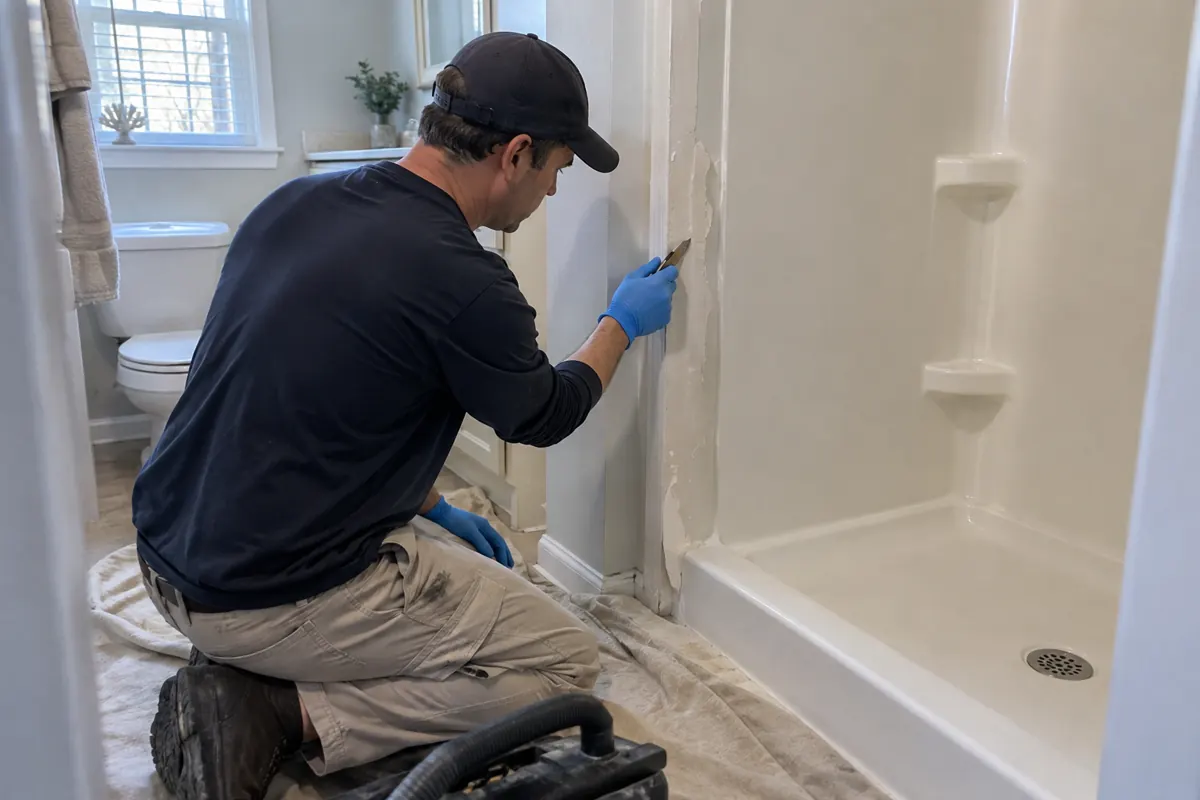
Fixing delamination properly takes more than a quick caulk-and-paint job. Here is the general process a professional reglazing job follows, and why each step matters.
- Inspect and test the surface. A technician checks how far the delamination has spread and whether there is any soft or water-damaged substrate underneath that needs separate repair first.
- Strip the old finish. Loose or failed material must be removed by a method suitable for fiberglass, while sound factory gel coat should be preserved when possible. Skipping this step is the single biggest reason DIY fixes fail, since new coating applied over a failing layer will peel again within months.
- Repair structural damage. Cracks, soft spots, or gaps are filled and reinforced with fiberglass repair material before refinishing continues.
- Deep clean and etch the surface. The surface is cleaned, degreased, dried, and mechanically prepared as required by the coating manufacturer.
- Apply a bonding primer. Any primer or adhesion promoter must be compatible with both the fiberglass substrate and the selected coating system.
- Apply the topcoat. A compatible refinishing system is applied according to its manufacturer’s requirements to create an even finish.
- Cure the surface. The coating needs time to harden fully before use. Jemco Reglazers’ finishes are typically ready to use within 24 hours, which is faster than many DIY kits that call for several days of curing.
We handle this full process as part of our bathtub resurfacing in New Jersey service, and fiberglass shower surrounds may require a related but substrate-specific process; separate options are available for tile reglazing in NJ.
Why a Professional Fix Beats a DIY Paint Kit
DIY tub paint kits are inexpensive, usually around $150 in materials according to Angi, and that low upfront cost is tempting. Product compatibility and preparation requirements vary, and some kits may not be suitable for a damaged fiberglass substrate or an existing failed coating.
Angi also notes that hiring a professional for bathtub refinishing helps ensure an even, durable finish and helps prevent streaking, bubbling, or peeling down the line, which is exactly the failure mode homeowners are usually trying to fix in the first place.
| Approach | Typical Result on Fiberglass | Best For |
|---|---|---|
| DIY paint-on kit | May peel if the product is incompatible or the surface is inadequately prepared | Very minor cosmetic touch-ups on sound surfaces |
| Professional spray-applied reglazing | Even finish applied with substrate-specific preparation | Visible delamination, peeling, or multiple failed prior coatings |
| Full tub or surround replacement | Resolves surface and structural issues but highest cost and disruption | Significant water damage to the subfloor or wall framing |
Resurfacing can save up to 70% compared to full replacement, which is often the better choice when the fiberglass shell itself is still structurally sound and only the coating has failed. You can read more about the tradeoffs in why resurfacing beats replacing a porcelain tub.
One-Time Refinish: What to Know About Fiberglass Specifically
Fiberglass has one important limitation that porcelain and cast iron do not share. According to reporting in The Washington Post, The Washington Post reported one experienced refinisher’s view that fiberglass tubs and surrounds may have only one practical refinishing cycle because chemical stripping can damage fiberglass and later coating removal may require careful sanding.
This is why getting the fiberglass reglazing job done correctly the first time matters more than it does with other tub materials. A rushed or low-quality refinish on fiberglass is harder to correct later, since there may not be a clean second strip-and-recoat option available.
Before committing to a quote, ask what prep steps are included and whether the coating system is rated specifically for fiberglass substrates, not just a generic tub finish.
Preventing Delamination After a Fiberglass Reglazing
A quality reglazing job can last for years, but a few habits make a real difference in how long the new coating holds up.
- Avoid abrasive powders, steel wool, and harsh bleach-based cleaners on the fresh coating. Use non-abrasive, pH-neutral cleaners made for refinished surfaces instead.
- Wipe down the surface after each use to limit hard-water mineral buildup, which is common throughout much of New Jersey’s water supply.
- Keep the bathroom ventilated to reduce trapped humidity, especially in shore-area homes near Toms River and Point Pleasant where ambient moisture runs higher.
- Re-caulk seams promptly if you notice gaps, since trapped water behind the coating is one of the main drivers of future delamination.
- Follow the care instructions provided after your service, particularly around how soon the surface can be used and cleaned. See our guide on how soon you can use a reglazed tub for specifics.
When to Call a Professional
Minor surface peeling in a small, contained area can sometimes be addressed with a localized repair. But widespread delamination, visible mold, soft flooring, or peeling that keeps returning after a previous DIY fix are signs it is time to bring in a professional.
A qualified repair professional can help determine whether the issue is limited to the finish or whether suspected water damage needs evaluation before coating work begins. Attempting to coat over active water intrusion will only delay a bigger repair and add cost later.
Jemco Reglazers is a family-owned business based in Toms River with 15+ years of hands-on experience serving Ocean County, Brick, Manchester Township, Lakewood, Jackson, and surrounding New Jersey communities. You can see examples of completed work in our gallery of completed reglazing work or review our frequently asked reglazing questions before reaching out.
Frequently Asked Questions
Can you paint over peeling fiberglass yourself?
You can, but it rarely lasts. Peeling means the existing bond has already failed, so painting over loose material without appropriate removal and surface preparation can cause the new layer to lose adhesion. A professional strip-and-recoat process addresses the underlying bond failure instead of masking it.
How long does a fiberglass reglazing job take?
Most professional reglazing projects are completed in just a few hours, though the exact time depends on the extent of delamination and any structural repairs needed first. The coating then needs to cure before use, which is typically within 24 hours for a professional-grade finish.
Can a fiberglass tub be refinished more than once?
Not necessarily. Reporting in The Washington Post notes that fiberglass tubs and surrounds can usually only be stripped and refinished one time, since the chemical strippers needed to remove a prior finish can damage the fiberglass shell itself. This makes getting the first refinish done correctly especially important.
What causes bubbles under a fiberglass tub coating?
Bubbles usually form when moisture gets trapped beneath the coating, often from humidity, a poor prior bonding job, or water seeping in through cracked caulk. Bubbles should be inspected to identify whether the failure is in an added coating, the gel coat, or the laminate before loose material is removed and the appropriate repair is selected.
Is it cheaper to reglaze or replace a peeling fiberglass tub?
Reglazing is usually the more budget-friendly option when the fiberglass shell itself is structurally sound, since resurfacing can save up to 70% compared to full replacement. Replacement becomes necessary mainly when there is significant underlying water damage or structural failure beyond the surface coating.
How do I know if my tub is fiberglass or acrylic?
Fiberglass tubs tend to feel thinner and flex slightly more when pressed near the rim, and they often have a visible gel coat sheen. Acrylic fixtures commonly use a thermoformed acrylic surface reinforced with fiberglass or another backing, so appearance and flex alone may not reliably identify the material. If you are unsure, a reglazing professional can identify the material during an inspection.
Sources
- How to refinish a bathtub – The Washington Post
- How Much Does Bathtub Refinishing Cost? (2026 Guide) – This Old House
- What Is Bathtub Reglazing? – Angi
- How to Repair Chips & Cracks in Your Bathtub or Shower Pan – HomeAdvisor
Written by the team at Jemco Reglazers, a family-owned New Jersey bathtub and tile reglazing company with over 15 years of hands-on experience restoring bathroom surfaces.