
Quick answer: Kitchen sink reglazing is a refinishing process that cleans, prepares, repairs, and recoats a worn porcelain, enameled cast-iron, or compatible fiberglass sink to renew its appearance without replacement. Jemco says most resurfacing projects are completed in a few hours and surfaces are generally ready to use within 24 hours, although timing varies by the sink and coating system.
Key takeaways
- Reglazing typically costs far less than replacing a kitchen sink and countertop, since you avoid demolition, new plumbing hookups, and cabinet or counter adjustments.
- Surface prep (cleaning, etching, chip repair, and masking) determines how long a reglazed finish lasts, so skipping steps shortens its life.
- Rust and mineral stains can often be removed or sealed over during reglazing rather than requiring a full sink replacement.
- Low-odor and water-based coating options exist for homeowners who want to limit fumes during the process.
- Most reglazed kitchen sinks can handle normal use within about 24 to 48 hours, though full cure time varies by coating type.
What Is Kitchen Sink Reglazing and How Is It Different From Bathroom Refinishing?
Kitchen sink reglazing involves cleaning and preparing a worn or stained sink, repairing suitable surface damage, and applying a compatible new coating to renew the finish. It works on porcelain, cast-iron, fiberglass, and some composite sinks that have dulled, yellowed, or developed rust spots over years of daily use.
Kitchen sinks face different wear patterns than bathroom fixtures. They are exposed to acidic foods, grease, frequent cleaning, and occasional hot cookware, so the chosen coating and care instructions must be suitable for kitchen-sink use. If you are also dealing with a vanity or bathroom sink, that process and set of products differ somewhat, and our NJ bathtub restoration services page covers that side of the business separately.
In homes with mineral-rich water or persistent moisture, deposits and staining may become more noticeable, but the sink’s material, condition, and cleaning history determine whether reglazing is appropriate.
How Do You Reglaze a Kitchen Sink? (Step-by-Step Prep and Process)
Whether you hire a pro or attempt a small DIY touch-up, the prep work is what separates a finish that lasts years from one that peels within months. Here is the general sequence professionals follow:
- Deep clean and degrease the sink to remove soap film, food residue, and oils that prevent coating adhesion.
- Repair chips and cracks with an epoxy filler, then sand the patched areas smooth.
- Abrade or otherwise prepare the existing finish as directed by the coating manufacturer so the new system can bond properly.
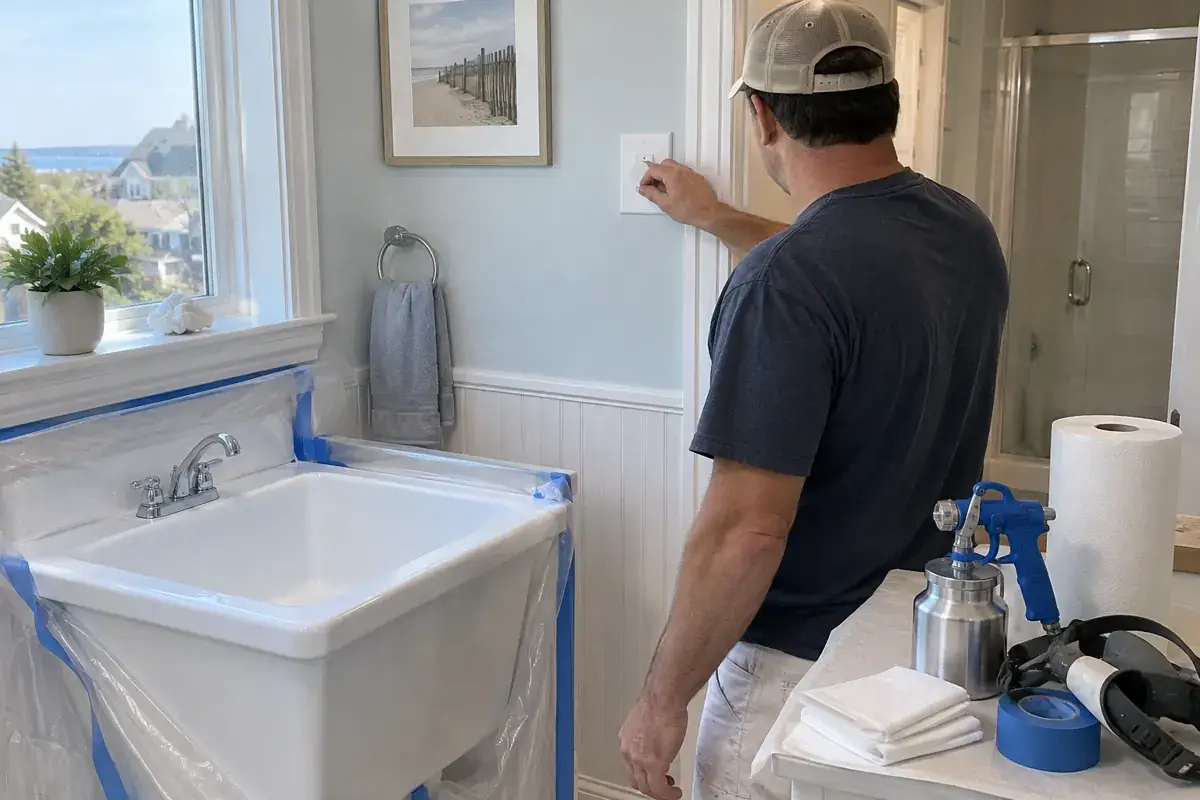
- Mask the surrounding countertop, faucet, and cabinetry to protect finished surfaces from overspray.
- Apply primer formulated for the sink’s base material (porcelain, cast iron, or fiberglass each need a slightly different primer).
- Apply two or more coats of the finish coating, allowing proper flash time between coats.
- Cure the surface before any water contact, following the coating manufacturer’s guidance.
According to Angi, a professional reglazing job on an average-size sink takes about six hours of hands-on work, though full cure time extends beyond that. Jemco states that most resurfacing projects are completed in a few hours and surfaces are generally ready to use within 24 hours, although the required cure time depends on the coating system.
What Are the Lower-Odor and Lower-VOC Reglazing Options?
Traditional reglazing coatings have historically used solvent-based epoxies and urethanes that produce strong fumes during application and curing. For kitchens, where ventilation can be limited and families want to use the space again quickly, several lower-odor alternatives have become common:
- Water-based epoxy coatings reduce volatile organic compound (VOC) emissions compared to solvent-based products, though they can require more coats to achieve the same durability.
- Low-VOC urethane topcoats cut down on odor while still resisting stains and scratches reasonably well.
- Spot and partial recoating limits the treated area, which reduces both fumes and cost compared to a full strip-and-recoat.
No coating is completely odor-free during application, so proper ventilation and a few hours of airing out are still part of any responsible job, regardless of which product is used. If anyone in the home has respiratory sensitivities, ask your contractor which product they plan to use and how long before the room should be aired out.
How Do You Remove Stains From a Kitchen Sink Before Reglazing?
Stains fall into a few categories, and the right approach depends on which one you are dealing with:
| Stain Type | Common Cause | Typical Fix |
|---|---|---|
| Rust rings | Metal cans, old pipes, or mineral-rich well water | Remove the rust, identify its source, and repair any exposed or deteriorated substrate before priming |
| Hard water mineral buildup | High calcium/magnesium content in NJ well or municipal water | Acid-based cleaner or vinegar soak, then etching before recoat |
| Yellowing or dullness | UV exposure, age, repeated harsh cleaners | Full strip and recoat rather than surface cleaning alone |
| Burn or scorch marks | Hot pots set directly on the basin | Sanding out the discolored layer, then priming and recoating |
Light staining can sometimes be improved with careful cleaning alone, but deep or set-in stains usually need to be sanded or chemically treated before any new coating is applied, otherwise they can show through or cause adhesion problems later.
Kitchen Sink Reglazing vs. Replacement: Which Makes More Sense?
Replacing a kitchen sink sounds straightforward, but it often triggers extra costs: disconnecting and reconnecting plumbing, possibly adjusting the countertop cutout, and disposal of the old unit. Reglazing avoids most of that.
HomeAdvisor reports that sink refinishing typically costs $220 to $500, with most homeowners spending around $360, compared to full sink replacement which HomeAdvisor and Angi estimate can run from roughly $220 up to $1,600 or more depending on sink type, material, and installation complexity. Reglazing a kitchen sink can save a meaningful percentage over replacement when the basin itself is structurally sound and only the surface has worn out.
Replacement makes more sense when the sink has multiple deep cracks, structural damage, or when you are already renovating the countertop and want a matching new basin. If nearby tile also needs attention, learn more about tile reglazing in NJ; countertop refinishing is listed among Jemco’s services.
How Long Does a Reglazed Kitchen Sink Last, and When Can You Use It?
A well-executed reglazing job, using proper prep and a quality coating, can last many years with reasonable care. HomeAdvisor notes that professionally reglazed surfaces often last 15 to 20 years, though kitchen sinks tend to see harder daily use than bathroom fixtures, so realistic expectations matter.
Most reglazed surfaces are ready for light use within 24 hours, though full cure (meaning full resistance to heat, chemicals, and heavy scrubbing) can take longer depending on the coating. Avoid placing hot pans directly in the basin, and do not use abrasive scrub pads; follow the coating manufacturer’s instructions for curing and ongoing care.
For a deeper breakdown of cure times by project type, see our page on how soon you can use a reglazed tub, which covers similar curing principles that apply to sinks as well.
DIY Kitchen Sink Refinishing Kits: Worth It or Not?
Home improvement stores sell DIY reglazing kits, and they can be a reasonable option for a single small chip or a minor cosmetic touch-up on a sink you are not relying on heavily. They are not a good substitute for full reglazing on a sink with widespread staining, multiple chips, or peeling coating.
Common problems with DIY kits include:
- Uneven coverage from brush or roller application versus professional spray equipment
- Coatings that are not rated for the heat and chemical exposure a kitchen sink sees daily
- A greater risk of premature peeling if surface preparation or application is inadequate
- No correction for underlying rust or structural chips before coating
If your sink has more than light surface wear, professional refinishing may provide more thorough preparation and a more even coating than a DIY kit. Jemco emphasizes honest, no-pressure service when discussing whether professional refinishing is appropriate.
When Should You Call a Professional Instead of DIY?
Some situations call for professional reglazing rather than a weekend project:
- Multiple cracks or a sink that flexes or feels unstable, which may indicate structural issues beyond coating
- Plumbing leaks around the drain or faucet base, which require a licensed plumber rather than a refinisher
- Extensive rust that has penetrated below the surface glaze
- Work that alters water-supply, sewer, drainage, waste, or vent piping; ask the local construction office whether permits or licensed plumbing work are required
Jemco Reglazers is a family-owned business based in Toms River, NJ, with more than 15 years of hands-on experience reglazing bathtubs, tile, sinks, and countertops across Ocean County, Hudson County, Essex County, and surrounding areas including Brick, Manchester Township, Freehold, Howell, Lakewood, Jackson, Middletown, and Princeton. We focus on honest assessments rather than upselling services a sink does not need. You can browse examples of completed work in our gallery of completed reglazing work or review our frequently asked reglazing questions before reaching out.
Kitchen Sink Restoration Tips to Make the Finish Last
A quality reglazing job is only as good as the care that follows it. A few habits go a long way toward protecting your investment:
- Use a cutting board or trivet rather than setting hot pans directly in the basin
- Avoid abrasive powders and steel wool; stick to soft cloths and non-abrasive cleaners
- Wipe up acidic spills (citrus, vinegar, tomato sauce) promptly rather than letting them sit
- Rinse and dry the sink after heavy use to prevent mineral buildup from NJ’s hard water areas
- Address small chips quickly rather than letting water get underneath the coating
For more on the full range of surface restoration work we do, including countertops and tile, see our full list of bathroom refinishing services or learn more about Jemco Reglazers and our approach to the work.
Frequently Asked Questions
Can you reglaze a stainless steel kitchen sink?
Reglazing is typically done on porcelain, cast-iron, fiberglass, and some composite sinks. Stainless steel does not hold reglazing coatings well because of its smooth, non-porous surface, so scratches and dullness on steel sinks are usually addressed with polishing compounds rather than a full reglaze.
Does reglazing fix a sink that has a visible crack all the way through?
Refinishing can address suitable surface chips after proper repair, but cracks should be evaluated before coating because they may indicate movement or structural failure. In that case, a reglazing professional will usually recommend replacement rather than attempting a cosmetic fix that will not hold.
Is kitchen sink reglazing safe for food preparation areas?
Use only a coating system the manufacturer identifies as suitable for kitchen sinks, allow it to cure fully, and follow all restrictions on food contact, washing, heat, and cleaning. Avoid very hot items and heavy scrubbing for as long as the coating manufacturer or refinisher directs during curing.
How do I know if my sink needs reglazing or just a deep clean?
If stains, dullness, or rust wipe away with cleaning and the surface feels smooth, a deep clean may be enough. If the coating feels rough, chalky, or chipped, or stains keep returning after cleaning, the underlying glaze has likely broken down and reglazing is the more lasting fix.
Can reglazing match my existing countertop or cabinet color?
Reglazing coatings come in a range of standard colors, and many professionals can color-match reasonably close to your existing scheme. Exact matches are not always guaranteed since coatings and original manufacturer finishes use different materials, so ask to see color samples before committing.
Sources
- How to Hire a Sink Refinishing Pro | Angi
- What Does Sink Refinishing Cost? | HomeAdvisor
- Who Should I Hire to Repair a Sink? | HomeAdvisor
- N.J. Admin. Code 5:23-2.7 – Ordinary Maintenance | Cornell Law
Written by the team at Jemco Reglazers, a family-owned New Jersey bathtub and tile reglazing company with over 15 years of hands-on experience restoring bathroom surfaces.