
Quick answer: A non-slip tub coating is a textured or etched finish applied to a bathtub floor to reduce slipping when wet, often paired with grab bars for added safety. Depending on the product and tub material, a traction treatment may be applied on its own or incorporated into a compatible refinishing system; use the tub only after the specified cure time.
Key takeaways
- A tub floor can become slippery when soap residue, mineral buildup, surface wear, or damage reduces traction, creating a concern for people of any age.
- Non-slip coatings fall into two main types: etching treatments that create micro-texture and additive coatings that add visible grip, and the right choice depends on your tub’s material.
- The CPSC has been studying bathtub slip resistance since the old ASTM F462 standard was withdrawn in 2016, underscoring that tub slipperiness is a recognized hazard, not just a marketing claim.
- Some slip-resistant additives can be incorporated into compatible reglazing systems; Jemco Reglazers states that its reglazed surfaces are typically ready to use within 24 hours.
- A coating helps with traction but does not replace grab bars, a shower seat, or a handheld showerhead for anyone with mobility concerns.
Why Do Bathtubs Get Slippery Over Time?
A brand-new bathtub usually has a faint texture molded into the floor, enough to give bare feet some grip. Soap scum and hard-water deposits can leave slippery residue, while age and harsh or abrasive cleaning can damage the finish and change how the surface feels underfoot.
In older homes, tubs may have decades of wear, with an original factory finish that has thinned, dulled, or become damaged. That loss of texture is one reason bathtubs remain a common site of household falls, and it is a problem that gets worse, not better, with age and use.
Hard water can leave mineral deposits on a tub floor, and residue from those deposits may affect traction even when the tub does not look heavily soiled. If your tub already shows dullness, staining, or chipping along with slipperiness, it may be a candidate for full bathtub resurfacing in New Jersey rather than a traction treatment alone.
What Are the Main Types of Non-Slip Tub Coatings?
Non-slip tub treatments generally fall into two categories, and knowing the difference helps you pick the right one.
Etching or Chemical Traction Treatments
These are mild-acid solutions scrubbed onto the tub floor to micro-etch the surface, creating thousands of tiny grooves that improve grip without changing the tub’s appearance much. According to Consumer Reports, these treatments are not a coating at all but a surface scrub, and they work on porcelain, ceramic, and stone.
Additive or Textured Coatings
These products add a thin layer with built-in grit or texture, similar to the slip-resistant additives sometimes mixed into epoxy during a reglazing job. Their durability and feel underfoot vary by product, surface preparation, application, cleaning, and use.
| Option | Best For | Care and Compatibility | Feel Underfoot |
|---|---|---|---|
| Chemical etching treatment | Porcelain, ceramic, stone tubs needing a quick traction boost | Match the treatment to the tub material and clean with residue-free products | Nearly invisible, mild texture |
| Textured additive coating | Tubs being reglazed or refinished anyway | Confirm the coating is made for the tub material and follow the maker’s cleaning instructions | Noticeably grippy, slightly rougher |
| Adhesive strips or treads | Smooth, non-textured tub floors as a low-cost fix | Apply to a smooth, clean surface and avoid bath oils that can weaken the adhesive | Raised ridges, can trap soap residue |
| Non-slip bath mat | Renters or anyone wanting a removable option | Use suction-cup mats only on smooth surfaces; remove and hang the mat to dry after use | Soft, cushioned |
Can a Non-Slip Coating Be Added During Reglazing?
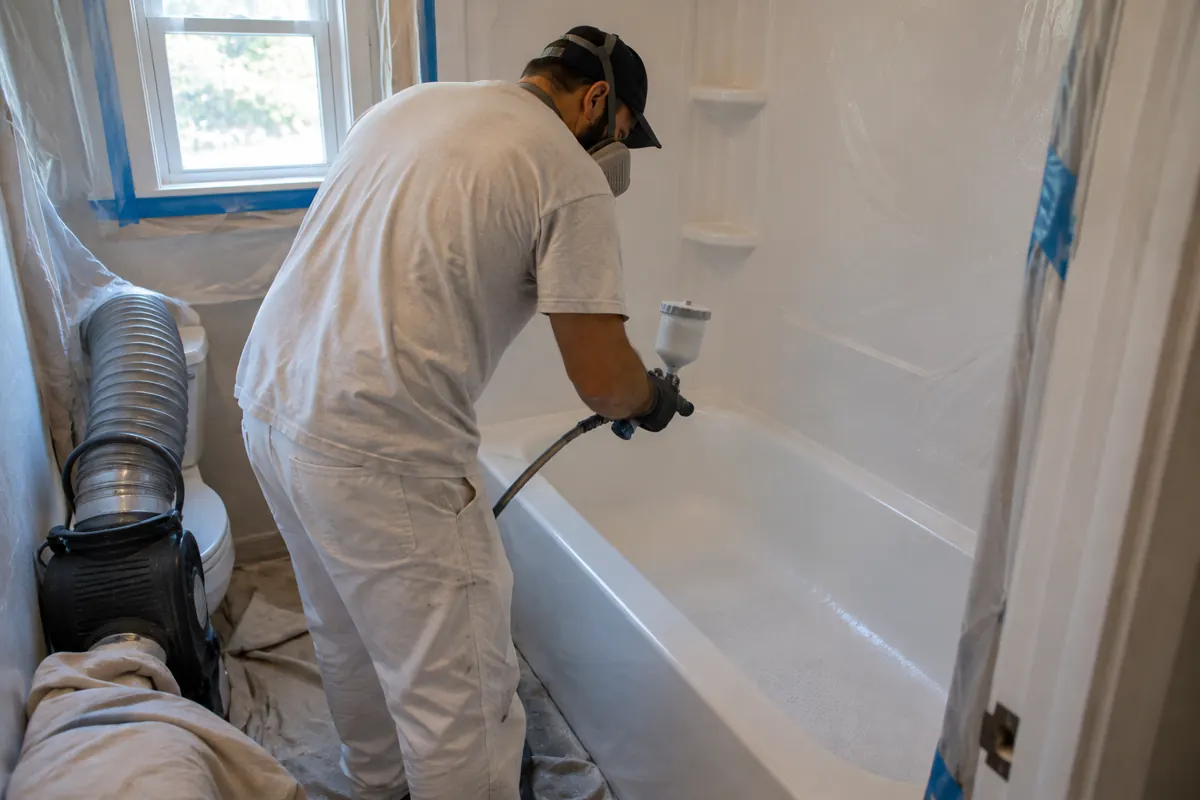
Yes. When a tub is already scheduled for NJ bathtub restoration services, a slip-resistant additive may be incorporated when it is approved for the refinishing system, although application and cure times depend on the products used. This is often more efficient than treating an old, worn finish separately, since the new coating gives both the traction additive and the base surface a fresh start.
If your tub is still in solid shape with no chips, cracks, or peeling, a stand-alone traction treatment may be enough and does not require a full reglazing. We try to recommend the simplest fix that solves the actual problem rather than upselling a bigger project than you need. Jemco Reglazers takes a no-pressure approach to these conversations, and if your tub just needs better grip, that is what we will recommend.
How Long Does Installation Take?
Timelines depend on whether the coating is a stand-alone treatment or part of a larger project.
- A chemical traction treatment may be completed in one visit, but the tub should not be used until every application, rinsing, ventilation, and wait-time instruction from the manufacturer has been followed.
- An additive coating applied during reglazing follows the same general timeline as a standard reglazing job, where most projects are completed in just a few hours.
- Jemco Reglazers states that its reglazed surfaces are typically ready for normal use within 24 hours. Stand-alone treatments and other textured coatings may have different wait times, so follow the instructions for the specific product.
Is a Non-Slip Coating Enough for Senior Bath Safety?
A coating improves traction, but it is only one piece of a safer bathroom for older adults. The U.S. Consumer Product Safety Commission has been working with ASTM to develop a new slip-resistance standard for bathtubs since the previous standard, ASTM F462, was withdrawn in 2016, and the agency’s ongoing research with Arizona State University on bathtub slip resistance shows how seriously fall risk in tubs is treated at the federal level.
For a genuinely safer bathing setup, pair a traction treatment or coating with:
- Grab bars mounted into wall studs or blocking, not just suction-cup models, for anyone with limited mobility.
- A shower seat or transfer bench to reduce standing time on a wet surface.
- A handheld showerhead so bathing can happen seated.
- Good lighting and a slip-resistant bath mat just outside the tub.
None of these are substitutes for each other. A textured tub floor helps with footing inside the tub, but it will not prevent a fall caused by reaching for a towel bar that cannot bear weight. If you are planning an accessibility-focused bathroom update, review the list of bathroom refinishing services and consult a qualified accessibility contractor about grab bars, seating, and other mobility features.
Non-Slip Coating vs. Bath Mats and Adhesive Strips
Mats and adhesive strips are the lowest-cost options, and they have real advantages for renters or anyone not ready to commit to resurfacing work. They also have drawbacks worth weighing honestly.
Suction-cup mats only work on smooth surfaces and need to be removed and hung to dry after each use, or they trap moisture and promote mold underneath. Adhesive strips remain in place until removed, but soap buildup, bath oils, and incompatible cleaners can affect traction or weaken some adhesives, so follow the product’s care instructions. A coating or etching treatment alters the tub surface rather than sitting loose on it, but it still requires routine cleaning with compatible products and may be difficult to reverse.
If your tub’s finish is already stained, chipped, or dull in addition to being slippery, treating only the slickness with a mat or strip will not address the underlying wear. In that case, resurfacing solves both problems at once. You can browse the gallery of completed reglazing work to see examples of refreshed surfaces.
What Should You Check Before Choosing a Non-Slip Product?
Not every product works on every tub. Matching the treatment to your tub’s material is the single most important step.
- Confirm your tub’s material (porcelain, enamel, fiberglass, or acrylic) before buying a DIY kit, since many etching treatments are formulated for only one type of surface.
- Check whether the product is meant for use over grout lines; most adhesive strips are not.
- Ask whether the treatment is approved for the tub material and request its slip-resistance test information, if available. For renovations involving structural changes or accessibility requirements, confirm applicable New Jersey code requirements with the local construction office.
- If your tub has chips, cracks, rust spots, or stains in addition to being slippery, those issues should be addressed first, since a coating applied over damage will not hold up as well. Our guide to removing rust stains from tubs covers that specific issue.
When in doubt, a quick phone consultation or in-person look can save you from buying the wrong product. A professional assessment can help determine whether a removable mat, a surface treatment, or refinishing is appropriate without committing to unnecessary work.
When Should You Call a Professional Instead of DIY?
DIY etching kits and adhesive strips are reasonable for a tub that is otherwise in good condition and simply needs more grip. They are widely available, but chemical treatments and adhesives can damage an incompatible finish or create exposure hazards, so verify surface compatibility, ventilation, protective-equipment, and application instructions before use.
Professional refinishing help makes more sense when the tub has underlying damage or when you want a compatible textured finish incorporated into a full refinish. Grab bars should be installed according to the manufacturer’s instructions with suitable structural support and waterproofing, often by a qualified accessibility or remodeling contractor. Jemco Reglazers has 15+ years of hands-on experience with bathtub and tile surfaces across Toms River, Manchester Township, Freehold, Howell, Lakewood, Jackson, Point Pleasant, Middletown, and surrounding Ocean County, Hudson County, Essex County, and Mercer County communities, and we are family-owned with a no-pressure approach to recommending what actually fits your bathroom.
If you are weighing a coating against a bigger decision, our page on why resurfacing beats replacing a porcelain tub walks through the cost and time tradeoffs in more detail, and resurfacing can save up to 70% compared to full tub replacement.
Frequently Asked Questions
Do non-slip tub coatings change the look of the bathtub?
Chemical etching treatments leave the tub looking essentially the same, since they create microscopic texture rather than a visible layer. Additive coatings applied during reglazing can have a slightly matte or textured appearance, which most homeowners find barely noticeable but worth knowing about before you commit.
How much does a non-slip tub treatment typically cost?
DIY etching kits and adhesive strip packs are generally inexpensive and available at hardware stores, while professional traction treatments or coatings added during reglazing vary based on tub size and condition. Ask for a written estimate that breaks out the cost of the traction add-on separately from any resurfacing work.
Will a non-slip coating fix a tub that already has rust or stains?
No, a non-slip coating only addresses traction, not cosmetic damage like rust, stains, or chips. Those issues should be treated or repaired first, since applying a coating over damaged or contaminated areas can shorten its lifespan and leave the underlying problem untouched.
Are grab bars required by code in New Jersey bathrooms?
Grab-bar requirements depend on the building type, occupancy, project scope, and applicable accessibility provisions; an existing private bathroom is not automatically required to be retrofitted simply because a non-slip treatment is added. Even where not required, grab bars are widely recommended for households with seniors or anyone with limited mobility.
How long should you wait before using a tub after a non-slip treatment?
Wait times vary by product and coating system. Jemco Reglazers states that its reglazed surfaces are typically ready for normal use within 24 hours, while stand-alone treatments should be used only after all manufacturer instructions have been completed. Always follow the specific product or contractor’s guidance, since cure times vary by product.
Sources
- CPSC: Bath Tubs (Adult) Voluntary Standards
- Federal Register: Bathtub Slip Resistance Study
- New Jersey Department of Community Affairs: Current Construction Codes
- Consumer Reports: How to Create a Safer, More Comfortable Bathroom
- Angi: What Is Bathtub Reglazing?
Written by the team at Jemco Reglazers, a family-owned New Jersey bathtub and tile reglazing company with over 15 years of hands-on experience restoring bathroom surfaces.