
Quick answer: Remove bathtub rust stains with lemon juice and salt or another cleaner approved by the tub manufacturer, using a soft, nonabrasive cloth or sponge and rinsing thoroughly. For stubborn stains, use a commercial rust remover made for tubs. If rust keeps returning, address the source, such as iron in the water, a dripping faucet, exposed metal, or corroded plumbing. If the finish is etched, chipped, or worn, ask a refinishing professional to assess it.
Key takeaways
- Lemon juice with salt or a manufacturer-approved rust cleaner can be a practical first step for light rust on porcelain tubs; avoid abrasive tools unless the tub manufacturer specifically permits them.
- Reddish-orange stains can come from trace iron in water or corroding galvanized plumbing, according to New Jersey American Water; rust may also form where a metal tub’s finish is damaged.
- Never mix bleach-based and acid-based cleaners, and always ventilate the bathroom and wear gloves when using commercial rust removers.
- If rust keeps coming back, identify and correct the source. If the surface is etched, chipped, peeling, or dulled, stop aggressive cleaning and consider a professional refinishing assessment.
- Fiberglass tubs need gentler methods than porcelain since abrasive pads and pumice stones can scratch and dull a gel-coat finish.
Why Do Bathtubs Get Rust Stains in New Jersey?
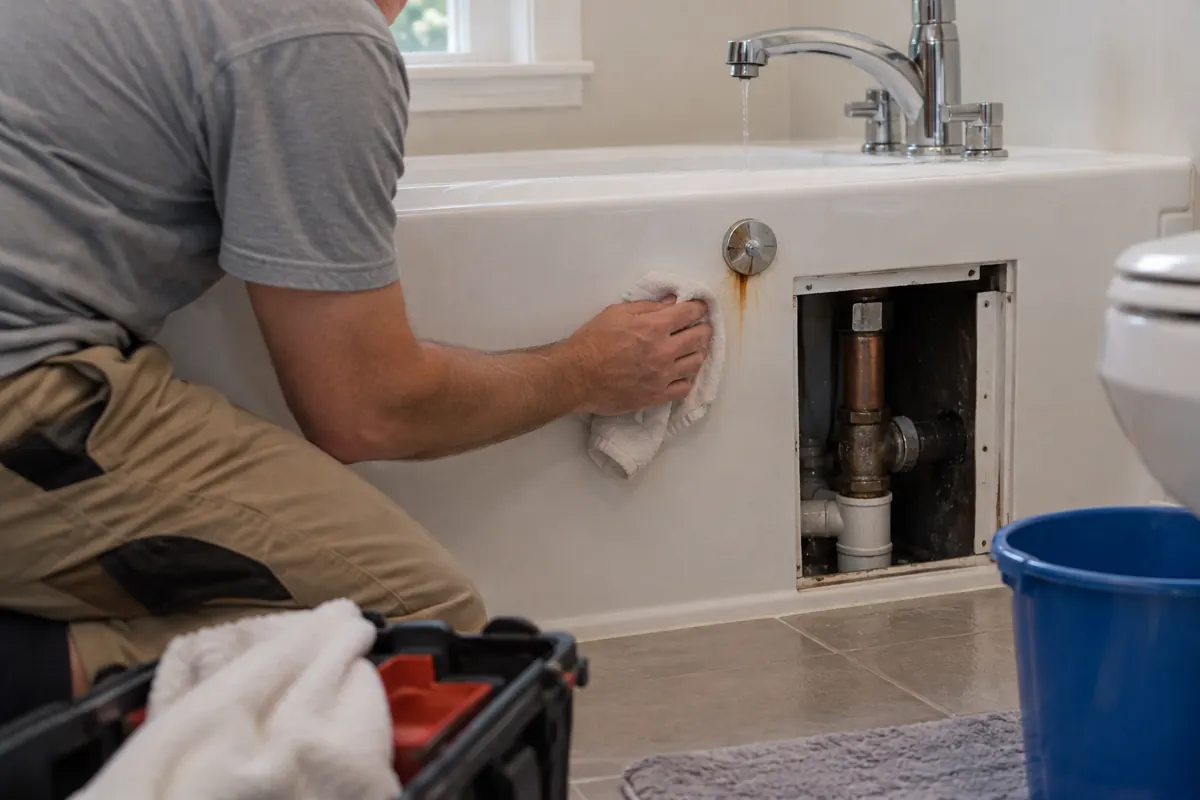
Rust stains can come from iron in the water, corroding plumbing, wet metal objects, or exposed metal where a tub’s finish is damaged. They come from trace iron in the water supply or from corroding galvanized steel plumbing, which is common in older New Jersey homes, according to New Jersey American Water. As the iron-laden water drips or sits on the surface and evaporates, it leaves behind a reddish-orange or brown stain, usually right under a leaking faucet or around the drain.
Older homes with galvanized plumbing, properties supplied by iron-rich water, and bathrooms with persistent drips may be more prone to reddish-brown staining. If the stain reappears within days, check for iron in the water, a dripping faucet, corroded plumbing, exposed metal, or a wet metal object left on the tub.
Is It Rust or a Mineral or Mold Stain?
Before you reach for a rust remover, confirm what you are actually looking at. New Jersey American Water’s guide to fixture stains breaks discoloration into a few common categories, and each needs a different approach.
| Stain Color | Likely Cause | Best First Treatment |
|---|---|---|
| Reddish-orange or brown | Iron in water or corroding galvanized pipes | Lemon juice and salt, or a commercial rust remover |
| White, chalky spots | Hard water mineral buildup | Distilled white vinegar soak |
| Pink or orange film | Airborne bacteria thriving in damp areas | Chlorine-based cleaner, used carefully to avoid scratching |
| Gray or black residue | Mold or mildew on damp surfaces | Bleach-based cleaner, with good ventilation |
If you are dealing with general discoloration beyond rust, our NJ bathtub restoration services page covers the broader picture of what reglazing can fix.
How to Remove Rust From a Porcelain Bathtub
Porcelain tubs can generally handle mild acids and light abrasion if the finish is still in good condition. Angi and This Old House both recommend starting with natural, low-cost methods before moving to stronger chemicals.
Method 1: Lemon Juice and Salt
- Scrape off loose rust gently with a dull plastic edge, not metal, to avoid scratching.
- Squeeze fresh lemon juice directly over the stain until it is fully covered.
- Sprinkle table salt over the wet area.
- Let it sit for several hours, reapplying lemon juice if it dries out.
- Rinse with cool water and check the result, repeating if needed.
Method 2: Baking Soda and Vinegar Paste
- Mix roughly three parts baking soda to one part white vinegar into a paste.
- Apply with a soft scrub sponge, working in small circles.
- Let it sit about an hour so the mild abrasive and acid can work.
- Rinse with cold water, repeating on stubborn spots.
Method 3: Pumice Stone
A pumice stone may remove rust from some porcelain surfaces, but it can scratch or dull the glaze; use it only if the tub manufacturer permits it, keep both surfaces wet, and test an inconspicuous spot first. Skip this method entirely on fiberglass or acrylic tubs since it will dull or scratch the finish.
How to Remove Rust From a Fiberglass Tub
Fiberglass tubs commonly have a gel-coat surface, while acrylic tubs have a different plastic surface; both can scratch or dull under abrasive cleaning. Avoid pumice stones, metal scrapers, and harsh powders on these surfaces.
- Use a soft cloth or non-abrasive sponge rather than a stiff brush.
- Try a diluted vinegar-and-water solution first, left on the stain for about 30 minutes, as suggested by This Old House.
- If needed, use a cleaner labeled safe for fiberglass or gel-coat surfaces, and spot-test in a hidden area first.
- Rinse thoroughly and dry the area to prevent water spotting.
Fiberglass tubs that are peeling or delaminating around the stain are a separate issue from surface rust and usually need resurfacing rather than cleaning.
Best Rust Removal Products for Tubs
When natural methods are not cutting it, a dedicated rust remover formulated for porcelain and fiberglass is the next step. Wirecutter has pointed to spray foam cleaners designed for rust and lime buildup as useful for tackling buildup that plain soap cannot touch.
| Product Type | Best For | Key Caution |
|---|---|---|
| Natural acid (lemon, vinegar) | Light, fresh stains on porcelain or fiberglass | Gentle but slower; may need repeat applications |
| Baking soda paste | Mild abrasion on porcelain with mineral buildup | Avoid on fiberglass; can leave fine scratches |
| Commercial rust remover (acid-based) | Stubborn or set-in rust stains | Strong fumes; never mix with bleach; ventilate and wear gloves |
| Oxalic acid or phosphoric acid cleaners | Heavy iron staining on porcelain | Can irritate skin and eyes; follow label directions exactly |
When using a commercial rust remover, follow its label for gloves, eye protection, ventilation, and any required respiratory protection; an ordinary dust mask does not protect against chemical vapors.
Safety Warnings Before You Start Scrubbing
A few safety basics matter more than the specific product you choose.
- Never combine bleach-based cleaners with acid-based rust removers or vinegar. The combination can produce dangerous fumes.
- Open a window or run the bathroom fan whenever using a commercial rust or mineral remover.
- Wear rubber gloves and avoid prolonged skin contact with acidic cleaners.
- Spot-test any new product in a small, hidden area of the tub first, especially on colored or older fiberglass finishes.
Preventing Rust Stains From Coming Back
Once you have cleared a stain, a few habits keep it from returning.
- Fix dripping faucets promptly, since a slow drip is often the actual source of a rust ring near the drain.
- Wipe down the tub after use so mineral deposits do not have time to set.
- Use a bath mat or tray for metal items like razors, cans, and tools, which can leave their own rust marks if left on wet porcelain.
- If testing confirms elevated iron, ask a qualified water-treatment professional which treatment system is appropriate for your water chemistry and plumbing.
For day-to-day care once a tub has been reglazed, see our guidance on frequently asked reglazing questions, which covers cleaning products that are safe for a refinished surface.
When Cleaning Isn’t Enough: Signs You Need Reglazing
Rust that returns within days usually points to an ongoing source, while a rough, pitted, chipped, peeling, or persistently dull surface may indicate finish damage that cleaning cannot correct. At that point, more scrubbing usually causes more harm, thinning an already weak finish.
Older tubs with worn, chipped, or peeling finishes may need repair or resurfacing after the source of the rust has been addressed. Jemco Reglazers, a family-owned business based in Toms River with more than 15 years of hands-on experience, resurfaces tubs rather than replacing them, which can save homeowners up to 70% compared to a full tub replacement. Most projects are completed in just a few hours, and the surface is ready to use again within 24 hours.
If you are weighing whether a deeply stained or worn tub is worth saving, our article on why resurfacing beats replacing a porcelain tub walks through the tradeoffs, and our bathtub resurfacing in New Jersey page covers how the process works.
DIY Cleaning vs. Professional Reglazing: Quick Checklist
Use this checklist to decide whether to keep cleaning or call a professional.
| Situation | Recommended Action |
|---|---|
| Light rust ring, tub surface still smooth and glossy | Try lemon juice, baking soda paste, or a commercial rust remover |
| Rust returns within a few days of cleaning | Check for a dripping faucet or high iron in the water supply |
| Stain feels rough or pitted, not smooth, when you run a finger over it | The finish may be etched or damaged; stop abrasive cleaning and consider a professional assessment |
| Tub is chipped, cracked, or peeling near the stain | Consider chip repair or resurfacing rather than cleaning alone |
| Scrubbing has dulled the finish over time | Professional reglazing restores a smooth, glossy surface |
You can browse examples of refinished surfaces in our gallery of completed reglazing work, or see the full list of bathroom refinishing services we offer across Ocean, Hudson, Essex, Mercer, and Somerset counties.
Frequently Asked Questions
Does vinegar damage a porcelain bathtub?
Plain white vinegar is generally safe for porcelain in short soaks or sprays, but leaving it on for extended periods or using it daily can gradually dull the glaze. Rinse thoroughly after use and avoid vinegar on natural stone tubs, since the acid can etch stone surfaces.
Can I use bleach to remove rust from a tub?
Bleach does not effectively dissolve rust and may intensify some iron discoloration through oxidation. It works better on mold, mildew, and biofilm. Never mix bleach with vinegar or acid-based rust removers, since the combination can produce harmful fumes.
Will CLR or Bar Keepers Friend remove bathtub rust?
Products like Bar Keepers Friend contain mild oxalic acid and are commonly used for rust and lime buildup on porcelain, as noted by Wirecutter. Follow the label instructions, wear gloves, rinse well, and spot-test first on colored or older fiberglass finishes.
Why does rust keep coming back in the same spot on my tub?
Recurring rust in the same location usually means the source is ongoing, such as a slow faucet drip, a rusting metal object left on the tub, or iron-rich water. Cleaning only removes the visible stain; fixing the root cause prevents it from returning.
Is it safe to use a pumice stone on every type of tub?
Pumice stones can scratch or dull porcelain as well as fiberglass, acrylic, and reglazed surfaces; use one only when the tub manufacturer specifically allows it. Always confirm your tub material before using an abrasive tool, and when in doubt, choose a gentler method.
How do I know if my tub needs reglazing instead of just cleaning?
If stains return quickly, the surface feels rough or pitted rather than smooth, or scrubbing has left the finish looking dull and scratched, cleaning alone will not solve the problem. A professional assessment can confirm whether reglazing is the more practical fix.
Sources
- Stains & Residue on Fixtures – New Jersey American Water
- How to Remove Rust From Your Bathtub: 5 Ways – Angi
- How to Prevent Bathroom Rust Stains – This Old House
- How to Clean a Bathtub and Sink – Wirecutter (NYT)
- How to Remove Rust Stains From Your Bathtub – Real Simple
Written by the team at Jemco Reglazers, a family-owned New Jersey bathtub and tile reglazing company with over 15 years of hands-on experience restoring bathroom surfaces.