Quick answer: Use mild liquid cleaners like dish soap, Scrubbing Bubbles, or ammonia-free Formula 409 on reglazed tubs, tile, and countertops. Avoid powdered abrasives, bleach, ammonia, and scouring pads, since they etch and dull the new coating. Regular cleaning with a soft cloth or non-abrasive sponge helps preserve the finish.
Key takeaways
- Soft liquid cleaners like dish soap, Scrubbing Bubbles, or ammonia-free Formula 409 are safe on reglazed surfaces
- Powdered cleansers, bleach, ammonia, and bar-keeper-style scouring powders can etch and dull a reglazed finish
- Always apply cleaners with a soft cloth or non-abrasive sponge, never steel wool or Scotch-Brite pads
- Wipe reglazed tubs, tile, and countertops dry after each use to prevent hard-water spotting common in NJ homes
- When a coating looks dull or scratched despite proper cleaning, it is usually time to call a reglazing professional rather than switch to stronger chemicals
Why Does Cleaning Matter So Much on a Reglazed Surface?
A reglazed bathtub, sink, tile wall, or countertop is not the same material it was before. The original porcelain, fiberglass, or cast iron is now covered with a specialized coating, usually an epoxy or acrylic-urethane finish, that gives the surface its smooth, glossy look. That coating sits on top of the base material rather than being fused into it the way factory porcelain is.
Because the coating is a finish layer rather than a solid material, it is more vulnerable to scratching, dulling, and chemical breakdown than the original surface was. Some etched or scratched finishes may require professional polishing, repair, or reglazing; avoid trying to buff the coating unless the refinisher confirms that the method is compatible. That is why the products you reach for under the sink matter more after a reglazing job than before one.
We cover how long to wait before using the tub at all in our guide on how soon you can use a reglazed tub. This article picks up after that point, once the surface is cured and part of your regular routine.
What Cleaning Products Are Safe on Reglazed Tubs, Tile, and Sinks?
The safest approach is a mild, non-abrasive liquid cleaner applied with a soft cloth or sponge. According to The Spruce, most refinishing companies and DIY tub coating manufacturers agree on a short list of commercial cleaners that work well on refinished surfaces without damaging the coating.
- Liquid dish soap (such as Dawn or Palmolive) diluted in warm water for everyday cleaning
- Scrubbing Bubbles bathroom cleaner, if the specific formula is approved by the refinisher, applied with a soft cloth
- Formula 409, if it is the bleach-free formula and is approved for the coating
- Lysol Basin Tub and Tile Cleaner, if permitted by the refinisher’s care instructions, for routine cleaning
American Standard recommends hot soapy water, liquid dishwashing detergent, and a soft cloth for its Americast tubs while warning against abrasive products. Americast is not the same as a reglazed coating, so use the refinisher’s care instructions when choosing products for a reglazed surface.
For reglazed tile specifically, the same mild liquid cleaners work on grout lines too, though grout has its own maintenance needs. See our guide on grout repair, cleaning, and sealing if your grout lines are staining or crumbling separately from the tile finish.
What Cleaning Products Should You Avoid on a Reglazed Surface?
The products that damage a reglazed finish fastest are the same ones many people grew up using on old porcelain tubs, which is exactly why reglazed surfaces get ruined so often. Abrasive and highly chemical products strip the thin coating layer in ways that are not always visible right away but add up over months of use.
| Avoid | Why It Damages a Reglazed Finish |
|---|---|
| Powdered cleansers (Comet, Ajax powder) | Gritty texture scratches the coating; many also contain bleach |
| Bleach-based cleaners | May discolor or damage some coatings; use only if the refinisher explicitly approves the product |
| Ammonia-based cleaners | May dull or discolor some finishes; follow the refinisher’s care instructions |
| Bar Keepers Friend and similar scouring products | Contains mild acids and abrasives that etch glossy coatings even without bleach |
| Steel wool, Scotch-Brite, or abrasive-side sponges | Physically scratches the surface, creating dull spots and micro-grooves that trap dirt |
| Vinegar or acidic soaks left standing | Prolonged acid contact can soften and discolor some coating types |
If rust stains or hard-water buildup have already taken hold, do not reach for a stronger abrasive cleaner to fix it. Our separate guide on removing rust stains from tubs covers methods intended to reduce the risk of damaging the coating.
How Should You Clean a Reglazed Tub or Tile Step by Step?
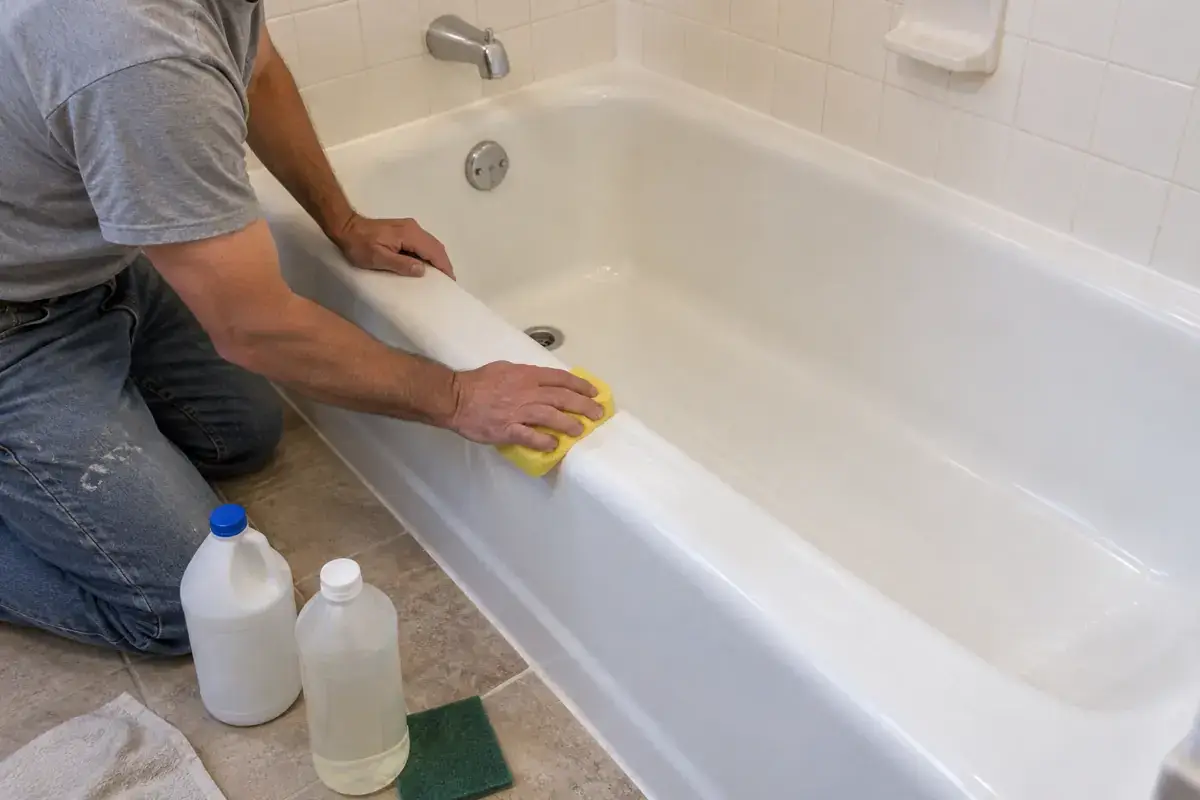
- Rinse the surface with warm water to loosen loose debris and soap film.
- Apply an approved mild liquid cleaner according to its label and the refinisher’s care instructions, using a soft cloth or non-abrasive sponge.
- Wipe in gentle circular motions, focusing on soap scum and water-line buildup rather than scrubbing hard.
- Rinse thoroughly with clean water to remove all cleaner residue.
- Dry the surface with a soft towel or coating-safe squeegee to reduce mineral spotting, especially if your home has hard water.
- Clean regularly rather than waiting for heavy buildup, since frequent light cleaning is easier on the coating than occasional heavy scrubbing.
Ventilation matters too. Always run the bathroom fan or crack a window when using any liquid cleaner, a basic safety habit regardless of which product you choose.
Does New Jersey Regulate the Cleaning or Coating Products Used in Reglazing?
New Jersey’s N.J.A.C. 7:27-23 limits VOC content for regulated architectural-coating categories. NJDEP’s 2025 amendments lowered limits for 12 existing categories and made other category changes, but whether a particular reglazing product falls within these rules depends on its classification and use.
These VOC rules concern covered coating products and their commercial use, not routine cleaning after the work is complete. Product-specific aftercare should come from the coating instructions and the refinisher rather than from the VOC regulation. For homeowners curious about how different coating types compare, our breakdown of epoxy coatings versus factory finish explains the tradeoffs.
What About Reglazed Countertops and Sinks Specifically?
Reglazed kitchen sinks and bathroom vanity countertops follow the same basic rules as tubs and tile, with one added concern: kitchens see more acidic exposure from food, citrus, and coffee. Wipe up these spills promptly rather than letting them sit, since prolonged acid contact is one of the more common causes of dulling on reglazed countertop finishes.
Avoid setting hot pots or pans directly on a reglazed countertop or sink edge, since heat can soften some coating types over time even though the surface feels solid to the touch. A trivet or cutting board protects the finish without much extra effort.
If you are weighing whether reglazing is even the right fix for a worn kitchen sink or vanity top, our pages on kitchen sink reglazing options and bathroom countertop refinishing and repair walk through what is possible and what is not.
When Should You Call a Professional Instead of Trying to Fix It Yourself?
Even with careful cleaning, reglazed finishes have a practical lifespan, and normal wear eventually shows up as dullness, fine scratching, or spots where the coating has thinned. If gentle, non-abrasive cleaning no longer restores the shine, that is a sign the coating is wearing down rather than a sign you need a harsher cleaner.
Switching to stronger chemicals at that point usually accelerates the damage instead of fixing it. The better move is to have the surface evaluated for a touch-up or full reglazing before small dull spots turn into cracking, peeling, or exposed base material.
Jemco Reglazers has worked on bathtubs, tile, sinks, and countertops across Toms River, Brick, Manchester Township, Freehold, Howell, Lakewood, Jackson, Point Pleasant, Middletown, and surrounding Ocean, Essex, Mercer, and Somerset County communities for more than 15 years. As a family-owned business, we take an honest, no-pressure approach to telling homeowners when a surface can still be maintained with proper cleaning and when it genuinely needs attention. You can see examples of completed work in our gallery of reglazing projects or review common questions on our frequently asked reglazing questions page.
Quick Reference: Safe vs. Unsafe Products for Reglazed Surfaces
Keep this short list near your bathroom or kitchen cleaning supplies as a quick reminder of what to reach for and what to skip.
| Surface | Use | Avoid |
|---|---|---|
| Reglazed bathtub | Dish soap, Scrubbing Bubbles, bleach-free Formula 409 | Comet, Ajax powder, Bar Keepers Friend, steel wool |
| Reglazed tile | Mild liquid cleaner, soft cloth, Lysol Basin Tub and Tile Cleaner | Ammonia-based sprays, abrasive grout brushes on the tile face |
| Reglazed sink | Dish soap, approved non-abrasive liquid cleaner | Baking soda paste, bleach soaks, acidic descalers left standing |
| Reglazed countertop | Mild liquid cleaner, prompt wipe-up of spills | Hot pans placed directly on surface, scouring powders |
For a full picture of what reglazing covers beyond cleaning and maintenance, our full list of bathroom refinishing services outlines the restoration work Jemco Reglazers performs across New Jersey.
Frequently Asked Questions
Can I use vinegar to clean a reglazed tub?
Do not use vinegar unless the coating manufacturer or refinisher confirms that it is compatible. Acidic cleaners can damage some finishes, so use an approved non-abrasive cleaner instead.
Will a magic eraser damage a reglazed surface?
Melamine foam erasers are mildly abrasive and can dull a reglazed finish with repeated use, even though they feel soft. Use liquid cleaners and a soft cloth, and avoid a magic eraser unless the refinisher specifically approves it for the coating.
How often should I clean a reglazed bathtub or sink?
Regular cleaning with an approved mild liquid cleaner helps prevent soap scum and mineral buildup from becoming difficult to remove. Frequent light cleaning is easier on the coating than occasional heavy scrubbing, which is when abrasive damage usually happens.
Can I use a bathtub mat or non-slip stickers on a reglazed tub?
Check the refinisher’s care instructions before using suction-cup mats or adhesive strips. For alternatives, see our guide to <a href=”https://jemcoreglazers.com/non-slip-coatings/”>non-slip tub coatings and safety options</a>.
Does hard water affect reglazed surfaces differently than regular porcelain?
Hard water can leave mineral deposits on both reglazed surfaces and original porcelain. Wiping the surface dry helps limit spotting without relying on harsh descalers. Drying the surface after each use is the simplest way to prevent buildup in areas with harder water.
What should I do if my reglazed surface is already damaged by the wrong cleaner?
Stop using the harsh product immediately and switch to mild liquid cleaners to prevent further damage. If dullness, etching, or scratching has already set in, the coating usually cannot be restored by cleaning alone and will need to be evaluated for a touch-up or full reglazing.
Sources
- The Spruce: How to Clean a Reglazed or Refinished Bathtub
- American Standard Knowledge Base: Cleaning Products for Americast Tubs
- Martha Stewart: How to Clean a Bathtub the Right Way
- NJDEP: Revisions to N.J.A.C. 7:27-23 and 24, Architectural Coatings and Consumer Products
Written by the team at Jemco Reglazers, a family-owned New Jersey bathtub and tile reglazing company with over 15 years of hands-on experience restoring bathroom surfaces.