
Quick answer: Grout repair typically involves removing loose or damaged material, cleaning the joints, and applying compatible new grout. Sealer can improve stain and moisture resistance for grout types that require it, and Angi reports national professional repair costs ranging from $50 to $1,200 depending on the scope and tile material.
Key takeaways
- Hairline cracks and gaps can admit surface moisture and may signal movement or deterioration, but the waterproofing system behind the tile—not grout alone—should protect the structure.
- Angi reports grout repair typically runs $50 to $1,200, with regrouting between $200 and $600 depending on scope.
- Cementitious grout may need periodic resealing based on the sealer instructions, use, and condition; some grout products do not require sealer, and sealing does not make an installation waterproof.
- DIY works for small spot repairs, but widespread cracking, soft spots, or recurring mold usually signal it is time to call a pro.
- Grout repair addresses the lines between tiles, while tile reglazing restores the tile surface itself, so homeowners often need both services together.
What Is Grout Repair and Why Does It Matter in New Jersey Bathrooms?
Grout fills the joints between tiles and may be cementitious, epoxy-based, or another formulation. It helps support and finish the joints, but the properly installed waterproofing system behind shower tile is what protects the substrate and framing from water. When grout cracks, crumbles, or pulls away from the tile edge, water finds a path underneath, and that is when real problems start.
Frequent use, poor ventilation, persistent surface moisture, harsh cleaning, and movement in the tile assembly can contribute to staining or grout deterioration. Bathrooms of any age need prompt attention when joints crack, crumble, or remain damp.
Left unaddressed, failing grout can lead to loose tiles, soft subfloor, and even structural rot behind the wall. Addressing damaged grout early may help limit the scope of maintenance, but recurring cracks or signs of a leak warrant an inspection of the tile assembly and plumbing.
How Do You Know If Your Grout Needs Repair?
Most grout problems show up gradually, so it helps to know the warning signs before they become a bigger issue.
- Visible cracks or gaps along the grout lines, especially near the tub or shower floor
- Grout that feels soft, crumbly, or comes out when scratched with a fingernail
- Dark staining or mold that will not lift with normal cleaning
- A musty smell in the bathroom that persists after cleaning
- Tiles that feel loose or shift slightly underfoot or when pressed
Soft wall areas can indicate moisture damage, while hollow-sounding tile may result from poor mortar coverage, loss of bond, or other installation problems. These conditions go beyond a simple grout repair and should be evaluated by a qualified contractor; plumbing work should be handled by a properly licensed plumber.
How to Repair Tile Grout Step by Step
Minor grout repairs are a reasonable DIY project for a handy homeowner. Here is the general process professionals follow for spot repairs.
- Remove damaged grout. Use a grout saw or oscillating tool to carefully cut out cracked or crumbling grout without chipping the tile edges.
- Clean the joint. Vacuum out debris and wipe the area with a mild cleaner to remove any mold or soap residue before new grout goes in.
- Let the area dry fully. The joint must be clean and dry enough for the selected grout, so follow the product instructions and allow additional drying time if the area was recently wet.
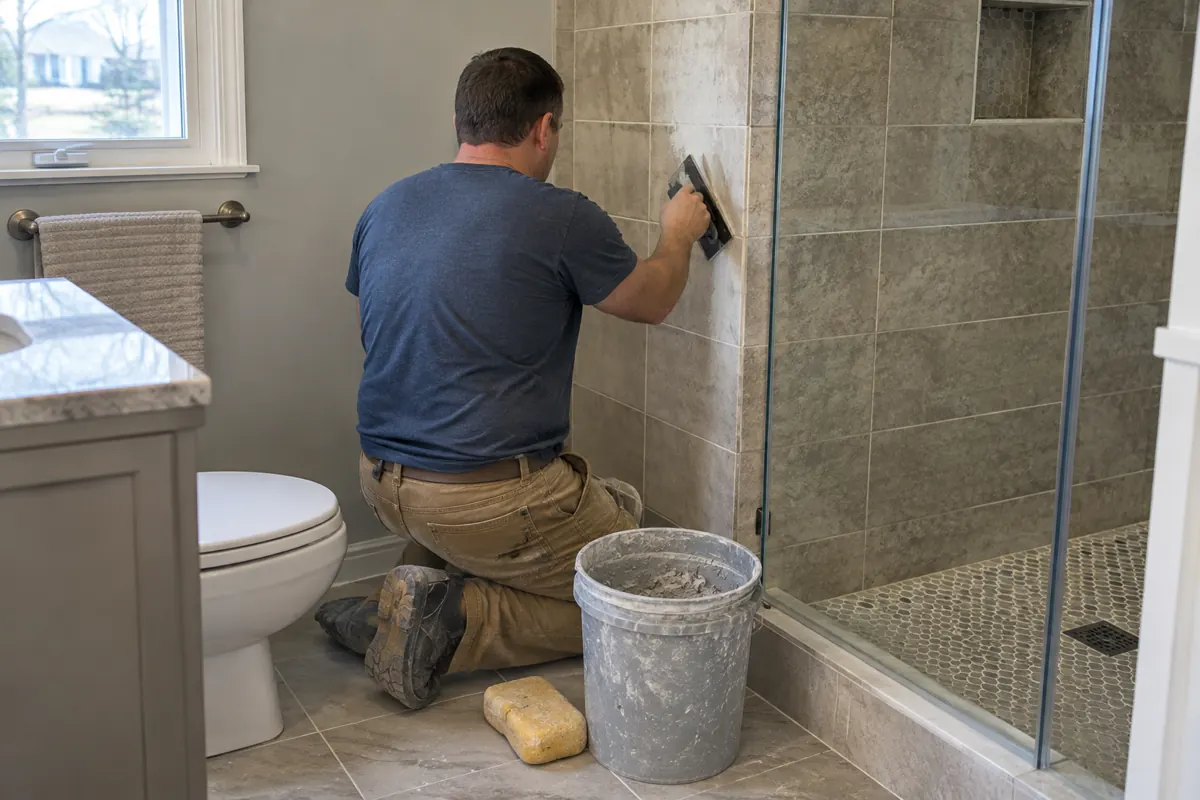
- Mix and apply new grout. Choose a grout compatible with the tile, joint width, location, and existing material, then mix and apply it according to the manufacturer’s directions.
- Wipe away excess. Use a damp sponge to clean the tile surface before the grout fully sets, working in diagonal strokes to avoid pulling grout back out.
- Cure and seal. Allow the grout to cure for the period specified by its manufacturer, then apply a compatible sealer only if that grout requires one.
According to Angi, minor crack or spot repairs typically cost $50 to $150 when hired out, while full regrouting of a bathroom runs $200 to $600, with the spread driven by square footage and tile size. Larger or structural grout failures, or any job that involves removing tile, usually make more sense for a professional.
Grout Cleaning Tips That Actually Work
Routine cleaning extends the life of grout and keeps mold from gaining a foothold. According to This Old House, the basic process starts with sweeping or vacuuming loose debris, then applying a cleaning solution and letting it sit before scrubbing.
- Use a soft-bristle brush or old toothbrush rather than metal scrubbers, which can scratch grout and nearby tile finishes
- Avoid harsh acidic cleaners on colored or reglazed tile surfaces, since they can dull the finish over time
- Run the bathroom fan during and after showers to cut down on the humidity that feeds mold growth
- Rinse cleaning solution completely, since leftover residue can attract dirt faster
- Address mildew spots as soon as they appear instead of waiting for a deep clean
Angi estimates professional tile and grout cleaning costs $285 to $676 per project nationally, with the price shaped by square footage, grout condition, and tile size. For rental properties, inspect and clean grout between tenancies and adjust the routine to the bathroom’s use, ventilation, and grout condition.
Why Sealing Grout Protects Your Bathroom Long Term
Cementitious grout is porous and can absorb moisture and soils. A compatible penetrating sealer can improve resistance to moisture and staining, but it does not make grout or the tile assembly waterproof; epoxy and some other grout products may not need sealing.
Sealing needs vary by tile, grout, sealer, use, and exposure. Follow the product instructions and reseal only when appropriate; ventilation and routine cleaning also affect staining and surface mold growth.
| Maintenance Task | Typical Frequency | Why It Matters |
|---|---|---|
| Routine grout cleaning | As needed for use and soil buildup | Removes soap residue and surface growth before staining worsens |
| Grout sealing | As directed for the grout and sealer | Improves resistance to moisture and stains but does not waterproof the assembly |
| Spot grout repair | When cracks or gaps appear | Restores damaged joints while prompting a check for movement or leaks |
| Full regrouting | When deterioration is widespread | Restores joints that are extensively cracked, loose, or permanently stained |
If grout work is needed alongside surface refinishing, contact Jemco Reglazers to discuss the refinishing scope and whether separate grout service may be necessary.
Grout Repair vs. Tile Reglazing: What Is the Difference?
Grout repair and tile reglazing solve different problems, and homeowners sometimes confuse the two. Grout work addresses the joints between tiles, fixing cracks, replacing missing material, and sealing against moisture. Tile reglazing, by contrast, resurfaces the tile itself, covering chips, stains, and outdated colors on the tile surface rather than the lines between them.
In many older bathrooms, both issues show up together. Tile may look dull or chipped at the same time grout lines are cracking or staining. Jemco Reglazers offers tile reglazing in NJ; any needed grout repair should be evaluated separately so each part of the bathroom receives the appropriate treatment.
If your tile itself is in good shape and only the grout looks worn, grout repair and sealing alone may be enough. If the tile is chipped, stained, or an outdated color, coordinating appropriate grout work with reglazing can create a more consistent finished appearance.
When Grout Problems Point to a Bigger Issue
Not every grout problem is cosmetic. Certain warning signs suggest the damage has moved past the grout line and into the structure behind the tile.
- Tiles that flex, shift, or sound hollow across a wide area rather than just at one joint
- Soft or spongy drywall near the tub, shower pan, or tile base
- Water stains appearing on a ceiling below the bathroom
- Grout that keeps failing in the same spot within months of a repair
These signs can point to a waterproofing or plumbing problem that falls outside routine grout repair. A qualified contractor can assess the tile assembly, and a properly licensed plumber should address suspected plumbing leaks. The New Jersey Department of Community Affairs enforces the state’s Uniform Construction Code, which governs permitted repair work on buildings and structures, so larger renovation projects involving framing or plumbing may require permits through your local construction office.
For bathrooms where the tub, tile, and surrounding surfaces are sound but worn-looking, NJ bathtub restoration or tile reglazing may avoid unnecessary surface replacement; damaged grout or suspected leaks still need separate evaluation. Jemco Reglazers is a family-owned business based in Toms River with more than 15 years of hands-on refinishing experience and serves Ocean County, Essex County, and Hudson County.
DIY Grout Maintenance vs. Hiring a Professional
Deciding whether to tackle grout work yourself or call in help depends on the scope of the damage, the tools on hand, and how much time you want to invest.
| Factor | DIY Approach | Professional Service |
|---|---|---|
| Scope of damage | Best for small spot repairs or routine cleaning | Better for widespread cracking, regrouting, or sealing a whole bathroom |
| Tools required | Grout saw, float, basic sealer, several hours of labor | Professional-grade sealers and equipment, faster turnaround |
| Color and material matching | Can be tricky to match existing grout color exactly | Experience matching grout type and shade to existing tile work |
| Risk if done incorrectly | Poor adhesion or uneven color if rushed | Lower risk of redo, backed by hands-on experience |
Jemco Reglazers takes a no-pressure, no-upsell approach to refinishing estimates and can explain whether tile reglazing fits the condition of the bathroom; grout repairs may require a separate qualified professional. You can see examples of completed work in the gallery of completed reglazing projects or review the full list of bathroom refinishing services before deciding.
Frequently Asked Questions
How long does grout repair take to complete?
The hands-on work for a minor spot repair may take a few hours, but the grout must still cure for the time specified by its manufacturer before normal exposure to water or any required sealing. Full regrouting takes longer, with timing determined by the area, removal work, grout product, and site conditions.
Can I grout over old grout instead of removing it?
Applying new grout directly over old, failing grout is not recommended, since it will not bond properly and the underlying cracks or mold will eventually show through. Removing the damaged grout down to a clean, stable joint gives new grout the surface it needs to adhere and last.
Does grout sealing stop mold completely?
Sealing reduces mold growth by limiting how much moisture grout absorbs, but it does not make grout mold-proof. Good bathroom ventilation, regular cleaning, and prompt attention to cracks still matter, since mold can form on the surface of sealed grout if humidity stays high for long periods.
Is colored grout harder to maintain than white grout?
How readily grout shows stains depends on its color, material, finish, and the type of soil; darker or mid-tone grout can still show mineral deposits or soap residue. Cleaning and sealing needs depend on the grout product and bathroom conditions, not simply whether the grout is white or colored.
Will grout repair fix a leaking shower?
Grout repair should not be treated as a fix for a leaking shower because grout is not the waterproofing layer. If a shower leaks or surrounding materials are soft, stop using it as appropriate and have a qualified contractor assess the tile assembly; contact a properly licensed plumber if a plumbing leak is suspected.
Sources
- How Much Does It Cost to Repair Grout? [2026 Data] | Angi
- How Much Does It Cost to Clean Tile and Grout? [2026 Data] | Angi
- How To Clean Grout | This Old House
- New Jersey Department of Community Affairs | Current Construction Codes
Written by the team at Jemco Reglazers, a family-owned New Jersey bathtub and tile reglazing company with over 15 years of hands-on experience restoring bathroom surfaces.