
Quick answer: You can change tile color without replacing tile by having it professionally reglazed with a bonded epoxy or urethane coating, or by painting it yourself with tile paint. Reglazing costs more upfront but generally provides a more durable, moisture-resistant finish, while tile paint is cheaper but may chip or peel sooner in humid or high-traffic areas.
Key takeaways
- Professional tile reglazing uses a bonded epoxy coating that can shift tile color completely and typically holds up for years with proper care.
- Tile paint is the cheaper DIY route, but Angi reports it can start chipping in as little as six months in high-traffic or humid areas.
- HomeAdvisor estimates professional tile reglazing runs $730 to $1,700, or $4 to $12 per square foot, far less than ripping out and replacing tile.
- Reglazing works best on structurally sound tile; cracked, loose, or missing tiles usually need repair first.
- Tile paint may fail faster in humid, poorly ventilated, or heavily used spaces, while professional reglazing is generally the more durable option.
Can You Really Change Tile Color Without Replacing It?
Yes. If your tile is structurally sound but the color is outdated, stained, or just not what you want anymore, you do not need to tear it out. Two main approaches let you change the color: professional reglazing with a bonded coating, or painting with specialty tile paint.
Both methods cover the existing tile surface with a new finish instead of removing and replacing it. The difference comes down to how the coating is applied, how long it lasts, and how much prep work goes into it. You can learn more about the professional option on our tile reglazing in NJ page, while this guide focuses specifically on the color-change decision.
This matters in bathrooms and kitchens where humidity, frequent moisture, or mineral buildup can challenge the adhesion and appearance of a new coating. Whatever method you choose needs to hold up against that environment, not just look good on day one.
Reglazing vs. Painting Tile: What’s the Difference?
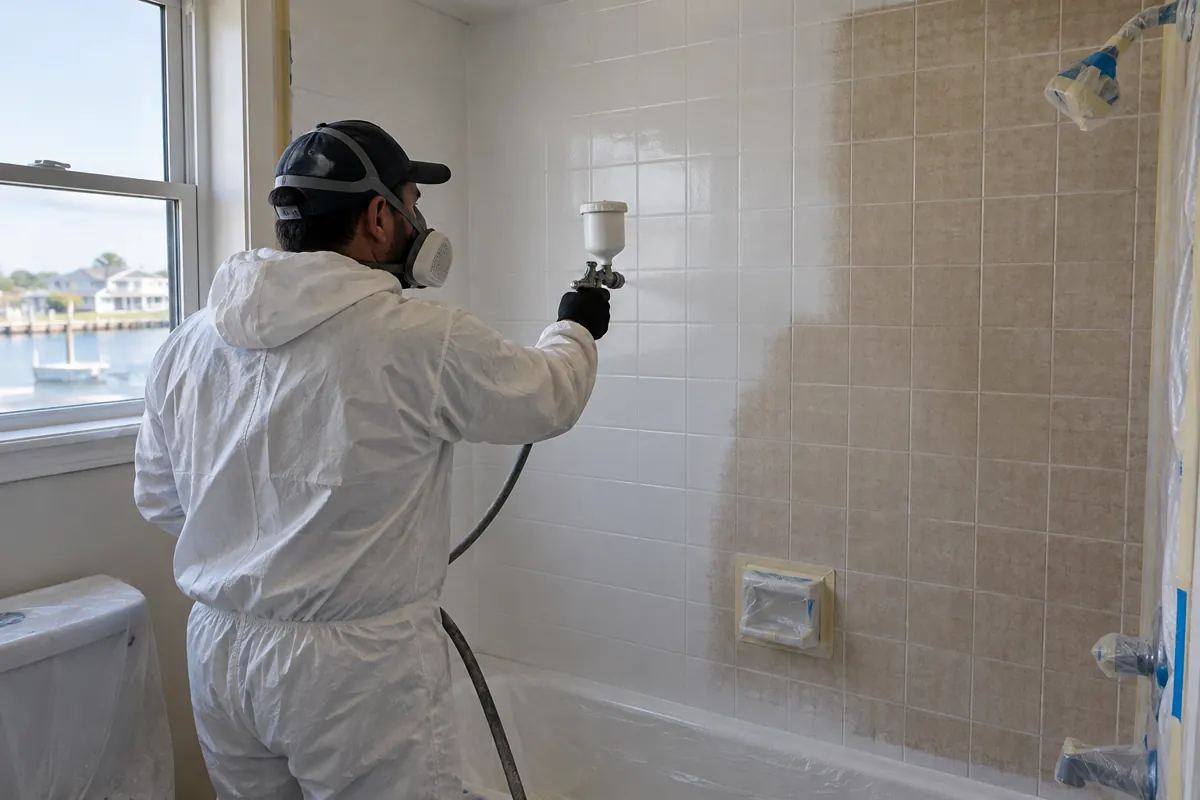
Reglazing and painting both change the surface color of tile, but they are not interchangeable processes. Reglazing is a professional service that involves cleaning, etching or sanding the tile, repairing minor chips, and applying a durable bonding primer followed by a specialized coating, often epoxy or urethane based. According to This Old House, this coating adheres tightly to the existing tile and can be customized to a wide range of colors.
Painting tile, on the other hand, is typically a DIY project using tile-specific paint from a hardware store. It is faster and cheaper to get started, but the coating is thinner and less resistant to moisture, scrubbing, and daily wear.
Key Differences at a Glance
| Factor | Reglazing | Tile Paint |
|---|---|---|
| Who typically does it | Experienced reglazing professional | Homeowner, DIY |
| Typical cost | $730 to $1,700 per HomeAdvisor’s 2025-2026 data, or $4 to $12 per square foot | Roughly $75 to $200 in materials per Angi, plus your own labor |
| Durability | Years, when properly prepped and maintained | Six months to about a year in high-traffic or humid spots, per Angi |
| Project time | A few hours for most bathroom tile jobs | Includes surface cleaning, sanding, priming, multiple coats, and label-specified drying and curing time |
| Humidity resistance | Formulated to bond and resist moisture | More prone to peeling in steamy bathrooms |
| Color range | Wide range, including custom matching | Limited to what’s available at retail |
If you want to see finished results before deciding, visit our gallery of completed reglazing work.
How Does Tile Reglazing Actually Change the Color?
Reglazing does not just tint existing grout lines or add a glaze over the old color. The process thoroughly cleans and prepares the existing finish, then applies a new bonded coating in the selected color.
- The tile is cleaned thoroughly to remove soap scum, hard water deposits, and mildew.
- The surface is etched or lightly sanded so the new coating has something to grip.
- Any small chips or cracks are patched so the final finish is smooth.
- A bonding primer is applied to help the coating adhere long-term.
- The color coat, or coats, go on in the shade you selected.
- The selected coating system is finished and cured according to the manufacturer’s specifications.
This process is why reglazing can completely transform tile from, say, a dated pink or avocado green from decades past to a modern white, gray, or soft neutral. Because the coating is opaque, the original tile color does not show through.
This is a different service from fixing structural damage. If tiles are cracked or chipped rather than just the wrong color, that is more of a repair issue, which our team also handles as part of full bathroom surface restoration.
What About DIY Tile Painting?
Tile paint is a legitimate option for homeowners on a tight budget or those planning a short-term fix, such as a rental turnover or a home about to be sold. Angi notes that DIY tile paint supplies can cost as little as $75, making it one of the most affordable cosmetic upgrades available.
However, the tradeoffs are real. Painted tile is more vulnerable to peeling, especially in bathrooms with poor ventilation, frequent steam exposure, or persistent humidity. Angi points out that painted tile in high-traffic areas can begin chipping in as little as six months if not properly sanded and sealed beforehand.
Paint does not repair surface defects, and neither paint nor reglazing should be used as a substitute for correcting loose tile, failed caulk, damaged grout, or underlying moisture problems.
If you are weighing a quick fix against a longer-term solution, it helps to understand the bigger picture of resurfacing economics, which we break down on our page about why resurfacing beats replacing a porcelain tub, since similar cost logic applies to tile.
How Long Does a Tile Color Change Last?
Durability depends heavily on the method, the prep work, and how the surface is used and cleaned afterward.
- Professional reglazing: With proper prep and care, a reglazed tile surface can last for years, especially when cleaned with non-abrasive products and not subjected to heavy impact.
- DIY tile paint: Angi reports well-painted tile in a low-traffic area should last at least a year, but high-moisture bathrooms and heavy use can cut that down to as little as six months.
- Grout condition: Even a great color-change job will look worse faster if the grout underneath is cracked, stained, or not properly sealed. Our guide to grout repair, cleaning, and sealing covers how to keep that part of the system in good shape.
In bathrooms with persistent humidity or frequent use, reglazing is generally a better long-term choice than ordinary tile paint.
Is Tile Reglazing Worth the Cost Compared to Replacement?
Replacing tile entirely means demolition, disposal, new material costs, and installation labor, plus the mess and downtime that comes with it. HomeAdvisor estimates professional tile reglazing costs between $730 and $1,700 on average, compared to a full tile replacement that can run well into the thousands once materials and labor are factored in.
Resurfacing instead of replacing can save homeowners up to 70% compared to full replacement, and most tile reglazing projects are completed in just a few hours rather than the days or weeks a full renovation demands. That difference matters for landlords and property managers managing rental turnovers in places like Lakewood, Jackson, or Howell, where minimizing vacancy time is a real financial consideration.
Reglazing is not the right call in every situation, though. If tile is missing, severely cracked, or there is water damage behind the wall, replacement or repair needs to happen first. A reputable reglazing company should tell you honestly when a color change alone will not solve the underlying problem.
For a full breakdown of what drives reglazing costs, our NJ bathtub restoration services page and the related article on the common bathtub reglazing pricing mistake explain pricing red flags to watch for, many of which apply to tile projects too.
Choosing a Tile Color That Works Long-Term
Picking a color is the fun part, but a few practical considerations help the choice age well.
- Lighting: Bathrooms with limited natural light tend to look better with lighter, reflective colors rather than deep, saturated tones.
- Resale plans: Neutral whites, grays, and soft beiges tend to appeal to a broader range of buyers if you plan to sell within a few years.
- Existing fixtures: Match or complement your tub, sink, and countertop color rather than treating tile as an isolated decision.
- Gloss vs. matte finish: Glossy finishes show water spots more in hard-water areas, while matte finishes can hide minor wear better over time.
We walk through finish and color decisions in more depth in our piece on custom bathtub colors and finish options, since the same gloss-versus-matte tradeoffs apply to tile.
When to Call a Professional Instead of DIY
DIY tile paint can be a reasonable short-term option, but there are situations where calling a professional makes more sense.
- The tile has cracks, chips, or missing pieces that need repair before any coating goes on.
- You want a color change that lasts years, not months, particularly in a frequently used bathroom.
- The space has poor ventilation or chronic humidity issues, both of which cause DIY paint to fail faster.
- You are preparing a rental or investment property and need a durable, professional-grade result without ongoing touch-ups.
Jemco Reglazers is a family-owned business based in Toms River with more than 15 years of hands-on experience handling tile, tub, sink, and countertop surfaces across Ocean County, Essex County, Hudson County, Mercer County, Somerset County, and communities including Toms River, Brick, Manchester Township, Freehold, Middletown, and Princeton. We take a no-pressure approach and will tell you honestly if a color change alone will solve your problem or if repair work needs to come first.
If you are not sure which route fits your situation, our frequently asked reglazing questions page covers common concerns, or you can see our full list of bathroom refinishing services to compare options for tile, tubs, sinks, and countertops.
Frequently Asked Questions
Can you change the color of tile without removing it from the wall or floor?
Yes. Both reglazing and tile paint apply a new coating directly over the existing tile, so there is no need to remove it. Reglazing involves professional prep and a bonded coating, while painting is a lighter DIY approach. Both work best on tile that is structurally intact, not cracked or missing pieces.
Does reglazed tile look as good as new tile?
Well-prepped reglazed tile can look like a brand-new surface, since the coating is opaque and fully covers the old color and minor imperfections. The quality depends heavily on prep work, including cleaning, etching, and repairing small chips before the coating goes on.
How soon can I use a tile shower or bathroom after a color change?
Timelines depend on the coating used and drying conditions. Professionally reglazed surfaces are often ready to use within 24 hours, while DIY paint may need longer cure times per the product label. For more specific drying guidance, see our <a href=”https://jemcoreglazers.com/usage-timeline/”>guide to reglazed-surface use timelines</a>.
Will changing tile color also fix stains or hard water buildup?
A quality reglazing job does address surface stains and discoloration because the old surface is cleaned and covered with a new coating. However, tile paint over heavily stained or mineral-crusted tile may show the staining through thinner coats if the surface isn’t properly cleaned first.
Is it cheaper to paint tile myself or hire a professional for reglazing?
DIY tile paint is cheaper upfront, with Angi estimating supply costs as low as $75 to $200. Professional reglazing costs more initially, with HomeAdvisor estimating $730 to $1,700, but its greater durability may provide better long-term value in frequently used bathrooms.
Can grout color be changed at the same time as tile color?
Yes, grout can be recolored or sealed as part of the same project in many cases. Addressing grout condition alongside a tile color change helps the overall finish look cohesive and prevents stained or cracked grout from undermining the new color.
Sources
- How to Paint Tile – Angi
- How To Reglaze Bathroom Tile and Freshen up your Surfaces – This Old House
- How Much Does It Cost to Reglaze Tile? – HomeAdvisor
Written by the team at Jemco Reglazers, a family-owned New Jersey bathtub and tile reglazing company with over 15 years of hands-on experience restoring bathroom surfaces.