
Quick answer: Cracked bathroom tile can often be repaired without replacement when the damage is superficial and the tile remains firmly bonded. Touch-up glaze or epoxy can improve the appearance, while professional reglazing may provide a more uniform finish; however, these surface treatments do not replace a sound waterproofing system behind shower tile.
Key takeaways
- A hairline crack confined to the glazed surface can often be patched with touch-up glaze or epoxy filler for $50 to $500, according to Angi.
- If a tile shifts underfoot, has extensive cracking, or shows signs of substrate movement, a surface patch is unlikely to hold. A hollow sound can indicate a void or loss of bond and warrants closer inspection.
- Tile reglazing can create a more uniform color and sheen across a suitable wall or surround, but cracks and chips must be properly repaired first and any underlying movement must be corrected.
- Most tile repair projects cost $280 to $663 nationally, per Angi, while its estimated range for shower retiling is $800 to $3,000.
- New Jersey’s Uniform Construction Code treats cosmetic surface repairs as ordinary maintenance that does not require a permit, unlike work that disturbs plumbing or structural components.
Can You Really Fix a Cracked Tile Without Replacing It?
In most cases, yes. A crack that stays within the glaze or top layer of a ceramic or porcelain tile can be filled, color-matched, and sealed so it is no longer visible or able to collect moisture. This is a common repair because tile is a hard but somewhat brittle material, and everyday impacts like a dropped shampoo bottle or a shifted toilet lid can chip the surface without damaging the tile underneath.
The key question is whether the crack is cosmetic or structural. A surface crack that does not go all the way through the tile body is a good candidate for patching. A crack that runs edge to edge, feels loose, or lets water seep underneath usually means the tile itself has failed and needs to come out.
Homeowners in Toms River, Brick, and other shore-area towns may also encounter hard-water deposits and moisture-related bathroom wear, but those conditions do not determine whether a cracked tile is structurally sound. Older homes in these areas often have tile that is decades old, which makes matching a single replacement tile difficult, and that is exactly where repair methods have an advantage over replacement.
How to Tell if a Tile Can Be Patched or Needs Full Replacement
Before choosing a repair method, check a few things. This quick self-inspection saves time and helps you describe the damage accurately if you do call a professional.
- Tap test: Gently tap the tile with a coin or the handle of a screwdriver. A solid, consistent sound means the tile is still bonded to the substrate. A hollow or dull sound may indicate a void or partial loss of bond beneath the tile, although tapping alone is not conclusive.
- Crack depth: Run a fingernail across the crack. If you feel a smooth surface groove, it is likely cosmetic. If you feel a sharp edge or the tile flexes slightly, the crack may go all the way through.
- Movement: Press down on the tile, especially on a floor. Any rocking or shifting means the tile has lost its bond and needs to be reset or replaced.
- Water intrusion: Look for discoloration, soft drywall, or a musty smell near the crack. This may indicate moisture behind the tile and calls for further evaluation rather than a surface patch; plumbing or structural work should be handled by the appropriately qualified trade professional.
| Sign | What It Means | Recommended Action |
|---|---|---|
| Hairline surface crack, tile is firm | Cosmetic glaze or body damage only | Touch-up glaze or epoxy filler |
| Chip missing a small chunk of glaze | Localized surface loss, tile intact | Epoxy patch, color-matched |
| Hollow sound when tapped | Adhesive bond has failed | Reset or replace that tile |
| Crack runs tile to grout line and beyond | Movement or substrate issue | Replace tile, inspect substrate |
| Discoloration or soft wall nearby | Water damage behind tile | Call a licensed contractor |
DIY Methods for Fixing Cracked Bathroom Tile
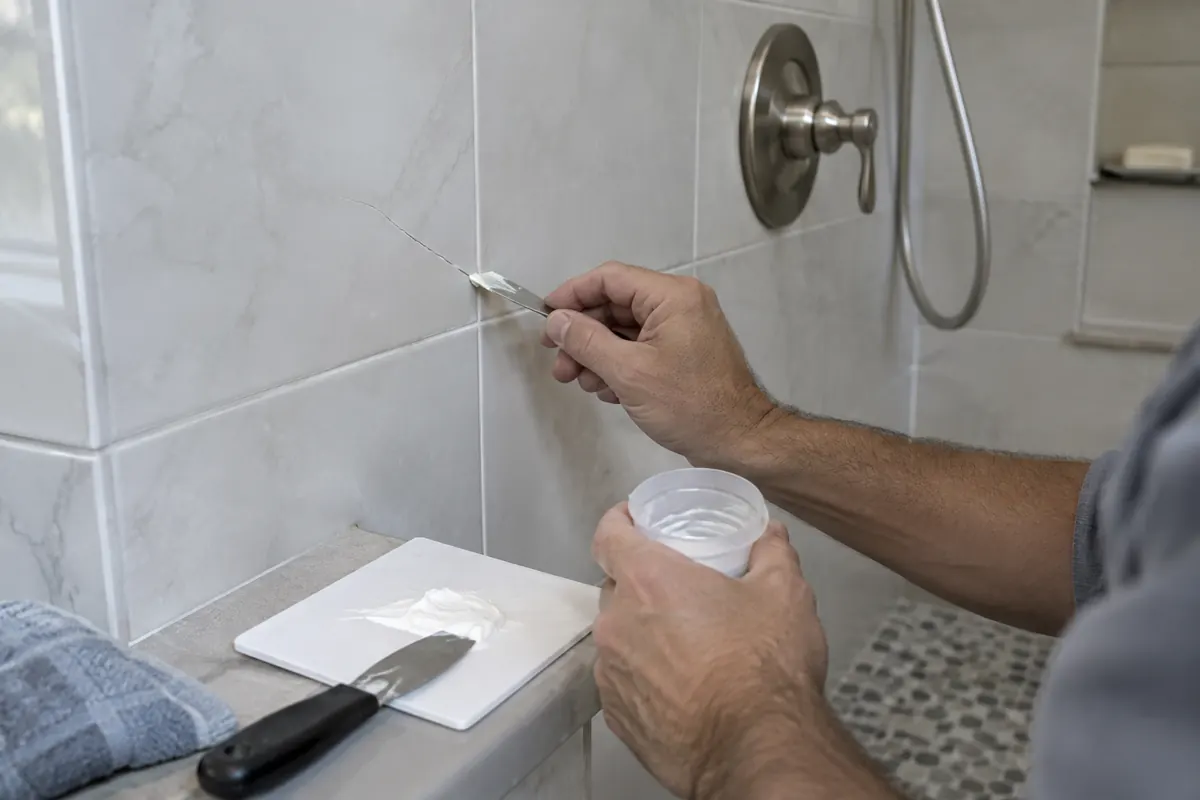
For small, surface-level cracks, a few DIY approaches work reasonably well. This Old House outlines a straightforward process for porcelain tile touch-ups that most homeowners can do in an afternoon.
- Lightly sand the damaged area with fine-grit sandpaper to smooth sharp edges.
- Mask off the surrounding tile with painter’s tape to protect it from drips.
- Apply touch-up glaze to a crack with a fine brush, letting it dry about 30 minutes between coats.
- For a chip, use a putty knife to apply a small amount of two-part epoxy filler, building up thin layers rather than one thick one.
- Sand the cured patch lightly to blend it with the surrounding sheen, since repairs often dry glossier than a matte tile.
- Allow the repair to cure fully, typically 24 hours, and avoid cleaning with any detergent for about five days, as This Old House recommends.
These kits cost under $30 and work best on a single chip or thin crack. They are not designed to cover large areas, match complex patterns, or hold up on a floor tile that bears regular foot traffic and water pooling.
When Professional Tile Repair or Reglazing Makes More Sense
DIY glaze works for one or two small spots, but it has limits. The color match is rarely perfect, the patch can wear faster than the original glaze, and it will not address multiple cracked or dated tiles across a shower wall.
This is where professional tile reglazing comes in. Instead of treating each visible blemish separately, a technician can prepare and resurface a suitable tile wall or surround for a more uniform finish. Stable hairline damage and chips must be repaired during preparation, while loose tile, substrate movement, or moisture problems need correction before any coating is applied.
Jemco Reglazers brings more than 15 years of hands-on experience to tile reglazing in NJ, including tile resurfacing and chip and crack repair. Because the process resurfaces the existing tile rather than tearing it out, most reglazing projects are completed in just a few hours, and the surface is ready to use within 24 hours.
For property managers and landlords in areas such as Lakewood and Manchester Township, resurfacing may reduce disruption compared with demolition and full retiling.
What Cracked Tile Repair and Reglazing Typically Cost
Costs vary widely depending on the extent of damage, tile material, and whether underlying water damage is involved. According to Angi, the national average for professional tile repair is around $467, with most homeowners paying between $280 and $663. Specific repair types break down differently.
| Repair Type | Typical Cost Range (Angi, 2026 estimates) |
|---|---|
| Cracked or broken tile (single tile) | $130–$500 |
| Chips or small holes | $50–$400 |
| Tile replacement | $120–$500 |
| Grout repair | $100–$700 |
| Water damage remediation | $1,500–$2,000 |
| Full shower retiling | $800–$3,000 |
Reglazing an entire tile surface is typically priced by square footage rather than per tile, since it treats the whole wall or floor at once. Jemco Reglazers notes that resurfacing an existing surface can save homeowners up to 70% compared to a full replacement, since there is no demolition, no new tile purchase, and far less labor involved. We do not publish fixed rates here because every bathroom’s size and condition differs, but we are happy to provide a straightforward, no-pressure estimate.
Permits and Code Considerations for Tile Repair in New Jersey
One question homeowners often ask is whether fixing or resurfacing tile requires a permit. Under New Jersey’s Uniform Construction Code, ordinary maintenance work, such as cosmetic surface repair, generally does not require a permit, according to N.J.A.C. 5:23-2.7. This typically covers patching, resurfacing, and similar work that does not touch plumbing, electrical systems, or structural components.
However, work involving a leaking pipe, shower-pan reconstruction, wall removal, or plumbing alterations may fall into a different code category and require permits or appropriately licensed trade professionals. Confirm the requirements with the local construction office before work begins. Surface refinishing may qualify as ordinary maintenance, while work involving wall removal, plumbing, structural components, or other regulated systems may fall into a different code category.
If you are ever unsure whether your project crosses that line, it is worth a quick call to your local construction office, or to a contractor experienced enough to recognize the difference.
Repairing Cracks vs. Other Tile Problems: Know the Difference
Cracked tile body damage is a different issue from some related problems homeowners often lump together. Knowing the distinction helps you choose the right fix instead of paying for the wrong service.
- Grout lines, not tile: If the damage is in the lines between tiles rather than the tile itself, that is a grout issue. See our guide on grout repair, cleaning, and sealing for that specific fix.
- Faded or outdated color: If your tile is structurally fine but you simply dislike the color, tile reglazing can also serve as a way of changing tile color without replacement.
- Leaking shower walls: Cracks combined with water stains behind the wall point to a waterproofing failure, not a cosmetic crack. Our page on shower tile waterproofing and repair covers that scenario.
- Small chips in tubs or sinks: Porcelain chip repair on fixtures uses similar touch-up techniques but is its own category of work, distinct from wall or floor tile.
Mixing these up is common, and it is one reason a quick professional assessment often saves money compared to guessing at a DIY fix that was never meant for the actual problem.
How Jemco Reglazers Approaches Cracked Tile Repair
As a family-owned business based in Toms River, Jemco Reglazers has spent more than 15 years working on bathrooms throughout Ocean County, Essex County, and surrounding areas, including Freehold, Howell, Jackson, Point Pleasant, and Middletown. We take an honest, no-pressure approach: if a tile truly needs replacement because the substrate has failed, we will tell you that rather than selling a coating that will not hold.
For tile that is a good candidate for resurfacing, most projects are completed in just a few hours, with surfaces ready to use within 24 hours. This makes it a practical option for homeowners who cannot be without a working bathroom for several days, and for landlords managing turnover between tenants.
You can see examples of completed work in our gallery of completed reglazing work, browse our full list of bathroom refinishing services, or read more about Jemco Reglazers and how we evaluate each job before recommending a repair method.
Frequently Asked Questions
Can cracked tile be fixed without removing it?
Yes, if the crack is limited to the surface or glaze layer and the tile is still firmly bonded underneath. Touch-up glaze, epoxy fillers, or professional reglazing can improve the appearance of stable surface damage, but they should not be relied on as a substitute for intact waterproofing behind shower tile. Tile that sounds hollow when tapped or has a crack running through to the substrate usually needs to be removed and replaced instead.
How long does a tile crack repair last?
The life of an epoxy or glaze patch depends on surface preparation, tile location, moisture exposure, movement, cleaning methods, and product instructions. Professional resurfacing may provide a more uniform finish, but it will not correct movement or moisture problems beneath the tile. Avoiding abrasive cleaners extends the life of any repair.
Will a tile crack repair match the original tile color exactly?
A close match is usually achievable with touch-up glaze or epoxy, but an exact match can be difficult, especially on older or discontinued tile patterns. Reglazing a suitable tile wall or surround, rather than spot-patching one tile, can produce a more uniform and consistent finish across the treated area.
Is it cheaper to repair cracked tile or replace it?
Repair is almost always cheaper for isolated cracks or chips. According to Angi, cracked tile repair typically runs $130 to $500 per tile, while full retiling of a shower can run $800 to $3,000 or more. Resurfacing the whole surface instead of replacing it can also cut costs significantly compared to a full tear-out.
Do I need a permit to repair cracked bathroom tile in New Jersey?
Generally no. Under New Jersey’s Uniform Construction Code, limited cosmetic work may qualify as ordinary maintenance without a permit, but the local construction office should confirm the classification when the project also involves plumbing, wall removal, waterproofing, or structural work. Work that involves plumbing, structural changes, or cutting into walls falls under different rules and may require a permit and a licensed contractor.
Can cracked shower tile cause water damage behind the wall?
Yes, if the crack goes through the tile and the waterproofing layer behind it, moisture can seep into the wall cavity over time. Signs include discoloration, a musty smell, or soft drywall near the crack. This situation needs more than a cosmetic patch and should be evaluated by a professional before it leads to mold or structural issues.
Sources
- How Much Does Bathroom Tile Repair Cost? [2026 Data] | Angi
- How to Fix Cracked and Chipped Porcelain Tile – This Old House
- N.J. Admin. Code § 5:23-2.7 – Ordinary maintenance
- N.J. Admin. Code § 5:23-6.4 – Repairs
Written by the team at Jemco Reglazers, a family-owned New Jersey bathtub and tile reglazing company with over 15 years of hands-on experience restoring bathroom surfaces.